An Idaho vehicle title costs $14 — among the cheapest in America — and the state's form pile stays mercifully short. One affidavit replaces a lost title, one application covers a transfer, and a $26 rush fee jumps the queue when a deal cannot wait three weeks.
The quirk to understand first: Idaho splits the work between the state and its counties. The Idaho Transportation Department prints and stores every title, while county assessors handle registrations and take applications in person. This guide maps the 2026 fees, the exact ITD forms for each situation, and the county quirks that change your total at the counter.
How Idaho Vehicle Titles Actually Work
ITD is the title authority. Applications flow either directly to ITD by mail or through any county assessor's DMV counter, which forwards the paperwork and adds a local admin fee. The title record itself lives in ITD's system regardless of where you applied.
Counties run everything registration-related: plates, renewals, emissions programs in the treasure Valley, and the admin fees that vary by county. Two buyers filing identical title applications in Boise and Coeur d'Alene pay the same $14 to the state and different county add-ons. The ITD vehicle titles page links each county's fee schedule.
Idaho Title Fees for 2026
Idaho's fee sheet is short, which is the point. These are the verified numbers from ITD and county pages.
| Item | 2026 Fee | Where It Goes |
|---|---|---|
| Original or duplicate title | $14 | ITD |
| Rush processing | + $26 | ITD |
| County admin fee | Varies by county | County assessor |
| Sales/use tax on purchases | 6% of value | State Tax Commission |
| Gift transfer tax | $0 with ST-133GT affidavit | Exempted |
The 6 percent use tax applies to vehicle purchases, collected at title time — typically when you register or title a recently bought vehicle. Family gifts dodge it entirely with the affidavit covered below, which makes the paperwork worth the five minutes it takes.
Replacing a Lost Idaho Title (Form ITD 3367)
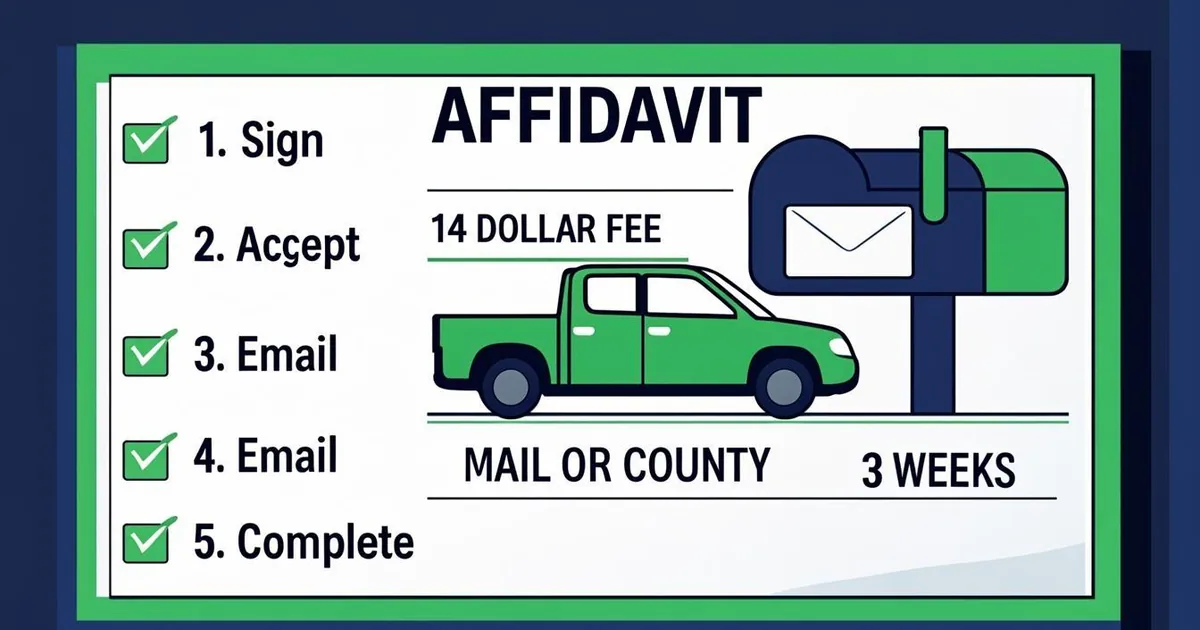
Lost titles use the Affidavit of Lost Title and Application for Title, form ITD 3367. It does exactly what the name says — swears the original is gone and applies for a fresh copy in one page.
- Download ITD 3367 or pick it up at any county DMV. The form covers vehicles and vessels together.
- Complete the vehicle section. You need the VIN, title number if known, and current owner details exactly as they appear in ITD records.
- Sign the lost-title affidavit. Every owner on record signs. Liens must be handled first — an open lien sends the replacement conversation to your lender.
- Attach $14. Checks go to the Idaho Transportation Department when mailing; county counters take cards.
- Mail to ITD or file at a county assessor. Mailing skips the county admin fee; the counter buys convenience.
- Wait about three weeks, or add $26 for rush handling when a sale or registration deadline is pressing.
ITD prints the duplicate and mails it to the owner of record. If the plan is to sell the vehicle at the same time, stop — a different form covers transfers, and using 3367 for a same-owner refresh keeps the file simple. Selling vehicles whose paperwork has drifted follows the sequence in lost title before transfer.
Buying or Selling: The Transfer Application
Transfers use the Duplicate Idaho Title Application with Transfer of Ownership when the original title is gone — listed as ITD 3369 by county sites and as ITD 3371 on ITD's own forms page, so ask for the "duplicate with transfer" application at the counter and the clerk will hand you the current version. Both parties complete their sections, and the buyer pays the $14 fee plus the 6 percent use tax on the purchase price.
When the original title still exists, the normal assignment on the back works — seller signs off, buyer applies for a new title in their name. Idaho does not impose a hard statutory transfer deadline like the 30-day windows common elsewhere, but county assessors expect the application promptly, and driving with expired registration catches up fast since registration renews on the owner's schedule, not the sale date.
Buyers should verify the VIN on the dash matches the title before signing anything. Mismatches stop transfers cold and start fraud investigations, which is why the pre-purchase checks in what is a car title matter even in a low-hassle state like Idaho.
A Complete Idaho Private Purchase, Start to Finish
Worked examples beat abstract rules, so here is a realistic Boise transaction. You are buying a 2016 Subaru Outback from a private seller for $14,000, and the seller holds a clean Idaho title.
- Verify identity and title. Match the seller's license to the title name, and match the VIN on the dash, door jamb, and paper. Two minutes here prevents weeks of fraud cleanup.
- Complete the assignment together. Seller signs the release of interest, odometer, and sale date; you sign as buyer. Note the $14,000 price honestly — the use tax is 6 percent of it either way.
- Photograph everything. The signed title, the bill of sale, and the seller's plate removal protect you if mail eats anything later.
- File at the Ada County DMV within days. Bring the assigned title, bill of sale, ID, and payment for $14 plus 6 percent use tax ($840 on this deal) plus registration and the county admin fee.
- Walk out with plates. Idaho counties issue plates at the counter, so the car is legal the same day.
Total state charges on this purchase: $854 before county add-ons and registration. Compare that with the same-price purchase in neighboring states and Idaho's small-fee structure stands out even more. Sellers who want a deeper pre-sale review should start at lost title before transfer, which covers the cases where the seller's paper is not clean.
When the Owner Died: Estate Titles in Idaho
Inherited vehicles follow probate paperwork rather than the standard transfer forms. Idaho counties accept small-estate affidavits for qualifying estates, which lets survivors move a vehicle without opening formal probate. Bring the death certificate, the small-estate affidavit or court order, and the current title if it survived the estate paperwork.
When the title itself disappeared during the estate transition, the affidavit route changes — the survivor swears to the loss as the estate's representative, and counties may ask for heirship documentation. The full inheritance sequence, including multi-heir signatures, is covered in lost title for an inherited vehicle.
Spousal situations have their own smoother lane in most states, and Idaho is no exception. Surviving spouses recorded on the title as co-owners take full control with the death certificate alone; sole-owner vehicles follow the estate path. The community-property comparison for other states sits in title transfer between spouses.
Bonded Titles: The No-Paperwork Rescue Path
Occasionally Idaho sees a vehicle with no title anywhere — abandoned purchases, dead storage liens, inherited projects with paper trails that evaporated decades ago. Idaho's answer is the bonded title process: the applicant proves ownership through alternative evidence, posts a surety bond sized to the vehicle's value, and receives a title branded as bonded for the bond period.
Evidence matters more than paperwork here. Bills of sale, canceled checks, old registrations, repair invoices, and notarized statements from prior owners all count. The VIN inspection verifies the machine matches the evidence. Bond costs typically run 1.5 to 2.5 percent of vehicle value through surety companies for the standard three-to-five-year window.
Call the county assessor before assembling anything — Idaho routes these cases through specific review, and pre-clearing your evidence list saves repeated trips. Buyers considering no-title project vehicles should read the bonded-title mechanics in lost title with a bill of sale before paying anyone.
Emissions, Plates, and Registration Realities
Idaho keeps title work simple, but registration carries local flavor. The Treasure Valley emissions program covers vehicles registered in Ada and Canyon counties above certain model years, so a Boise-title transaction may include an emissions test the same week. Rural counties skip emissions entirely.
Plates follow the owner in Idaho, not the vehicle — a common surprise for newcomers from plate-stays states. Personalized and specialty plates transfer to your next vehicle when you sell, while the buyer starts fresh. Standard renewal fees vary by vehicle age and county, with older vehicles qualifying for reduced vintage classifications.
Gifting a Vehicle in Idaho: Form ST-133GT
Family gifts skip the 6 percent use tax with the Gift Transfer use-tax exemption certificate, form ST-133GT from the Idaho State Tax Commission. The form's reach is unusually wide: it exempts vehicles, vessels, campers, trailers, and recreational vehicles moving as gifts.
Both parties complete the certificate, the title assignment notes the gift, and the recipient files the stack at title time. The exemption covers genuine family transfers, and the Tax Commission defines eligible relationships on the form itself. Cousins and in-laws should read the list before assuming — the standard family-gift rules from family title transfers apply here.
New Residents and Out-of-State Vehicles
Idaho gives new residents 30 days to title and register after establishing residency. The packet is standard: out-of-state title, proof of identity, and payment for the $14 title plus registration and county fees.
Vehicles arriving from other states typically need a VIN inspection before Idaho paperwork issues. Most county assessors perform the check at the counter for a small fee, matching the VIN against the out-of-state title. Vehicles with bonded or irregular titles from other states face extra review, so bring every ownership document you own — the fuller the paper trail, the fewer trips.
New arrivals with financed vehicles should contact the lienholder before the 30-day clock gets short. Out-of-state lenders hold titles electronically or in branch vaults, and ITD records the lien on the new Idaho title once the lender's details arrive. The financed-vehicle playbook in lost title with an active loan covers the coordination.
Boats, Trailers, and Special Vehicles
Idaho titles vessels under the same ITD system, so a lost boat title uses the same ITD 3367 affidavit and $14 fee as the family truck. The details differ by watercraft class, and the dedicated walkthrough at lost boat title replacement covers hull identification numbers and USCG-documented vessels.
Trailers flip the expectation: Idaho skips titles for trailers under 2,000 pounds unladen, registration only. A lost paper for a light utility trailer means replacing the registration at the county assessor, not filing ITD 3367. The weight-exemption map for all 50 states lives in lost trailer title replacement.
Off-highway vehicles, snowmobiles, and oversized vehicles carry their own registration programs through Idaho's county offices and parks departments. Titles follow the same $14 ITD structure, but registration stickers and use rules run separately — expect two desks for one machine.
Liens and Electronic Titles in Idaho
Idaho records liens on the ITD title record, and lenders clear them electronically at payoff in most cases. Once the lien releases, owners who want the lien physically gone order a duplicate — the $14 reprint without the lender line is the cleanest proof of free-and-clear ownership for a future sale.
More than 40 states now operate electronic lien and title programs in the AAMVA framework, and Idaho's lenders work in that environment. Paper release letters still matter for private sales, so request one at payoff even when the electronic flag clears. The release letter template and escalation steps live in lost title with an active loan.
Mistakes Idaho Applicants Make Most
Idaho's simple system still generates its share of rejections, and the county pages list the same repeat offenders. Clear these before any application leaves your hands.
- Owner name on the application does not match ITD records — bring the registration and copy the spelling exactly.
- One of two owners signs the ITD 3367 affidavit; both signatures are required.
- The $14 check arrives without the county admin fee at a counter filing, which bounces the packet back for the difference.
- Gift filings skip ST-133GT and write a token price, triggering the 6 percent tax on fair value anyway.
- Out-of-state arrivals skip the VIN inspection and discover the gap at the counter.
- Lien release never filed after payoff, so the duplicate prints with the old lender still attached.
Ada County's DMV documents page — Ada County Assessor motor vehicle documents — lists every current form and requirement, and it stays more current than third-party form sites. Rural counties mirror the same list. Ten minutes reading the county page before the drive beats a second trip for a missing signature.
Snowbirds and Multi-State Owners
Idaho hosts a large seasonal population, and title questions get strange when two states think a vehicle is theirs. The governing rule is simple: the vehicle titles where it is garaged most of the year. A Montana plate on an Idaho-garaged truck for a decade is an out-of-state compliance problem, not a loophole, and Idaho counters sort these out with insurance and residency documents when they surface.
Seasonal owners planning a permanent move should title promptly in the new home state and drop the old registration the same month. Vehicles kept in both states legally — a Twin Falls summer car and an Arizona winter car — stay cleanest when each carries its own state's registration and insurance disclosure. Insurers ask the garaging ZIP for a reason, and mismatched answers create claim headaches.
When a snowbird's paperwork finally collapses — an Idaho title lost years ago, an Arizona registration lapsed, a death in the family mid-move — the fix order matters. Replace the title in the issuing state first, then transfer. Trying to skip straight to the new state's paperwork strands both applications in review, which is the most expensive detour in multi-state ownership.
County Counter Tips That Save Trips
Ada and Canyon counties absorb most of the state's volume and run appointment systems. Rural counties often process faster at the counter but keep shorter hours. These habits work everywhere.
- Mail simple duplicates to ITD and skip the county admin fee entirely.
- Use the counter when you need the title fast — rush handling pairs with in-person filing.
- Bring the registration; it carries the VIN and owner spelling that must match ITD records exactly.
- Ask for the duplicate-with-transfer form when selling, not the same-owner affidavit.
- Confirm your county's admin fee online before the visit to avoid counter surprises.
Idaho's small-fee, short-form system is what big-state owners envy. Compare it with the county-free Delaware approach or the fee-heavy Illinois structure and the trade-offs across America become obvious.