Replacing a lost title for an inherited vehicle is the trickiest version of the duplicate-title problem, because the one person who could sign the application is no longer here. State DMVs know this, and they will not let you order a replacement in a deceased owner's name the way a living owner would. The estate paperwork has to come first.
Georgia's Department of Revenue states the rule plainly: when the title is not available, a replacement cannot be issued in a deceased person's name, so the estate or heir must move the transfer forward without it. Most states work the same way, with local variations in forms and thresholds.
The process is very doable, though. Thousands of families finish it every month using death certificates, heirship affidavits, or short probate filings. This guide explains the sequence in 2026: settling which legal path fits your family, replacing or transferring the missing certificate, and registering the vehicle in your name.
Why a Lost Title Gets Harder When the Owner Has Died
A living owner's lost title has a one-form fix. You file the state's duplicate application, pay a fee, and wait. Death breaks that path, because the duplicate application requires the owner's signature and identity verification, and the DMV cannot verify either for someone who has passed.
What the state will accept instead is authority. Either a court appoints you as executor or administrator, or the state's small-estate rules let you claim the vehicle with an affidavit. Every document in the chain flows from that authority, which is why the DMV form is never the first step.
Ownership is also frozen at death. Even a car with keys in the driveway and insurance in the heir's name legally belongs to the estate until the transfer completes. Driving it regularly, selling it, or letting insurance lapse during that window creates problems that outlast the paperwork.
Liens freeze too, and they outlive the owner. A financed inherited vehicle follows the lender's payoff process no matter what the will says, and the lender will talk to the estate representative only, not to family members with good intentions. Insurance companies also behave differently once they learn the policyholder has died, so keep the policy active in the interim and disclose the situation rather than quietly rewriting it.
Start With the Estate Paperwork, Not the DMV Form
Before any title application, figure out which of three situations you are in. The vehicle was jointly owned with a surviving co-owner. The estate is small enough for an affidavit process. Or the estate needs formal probate with a court-appointed representative. Each path changes which forms reach the DMV counter.
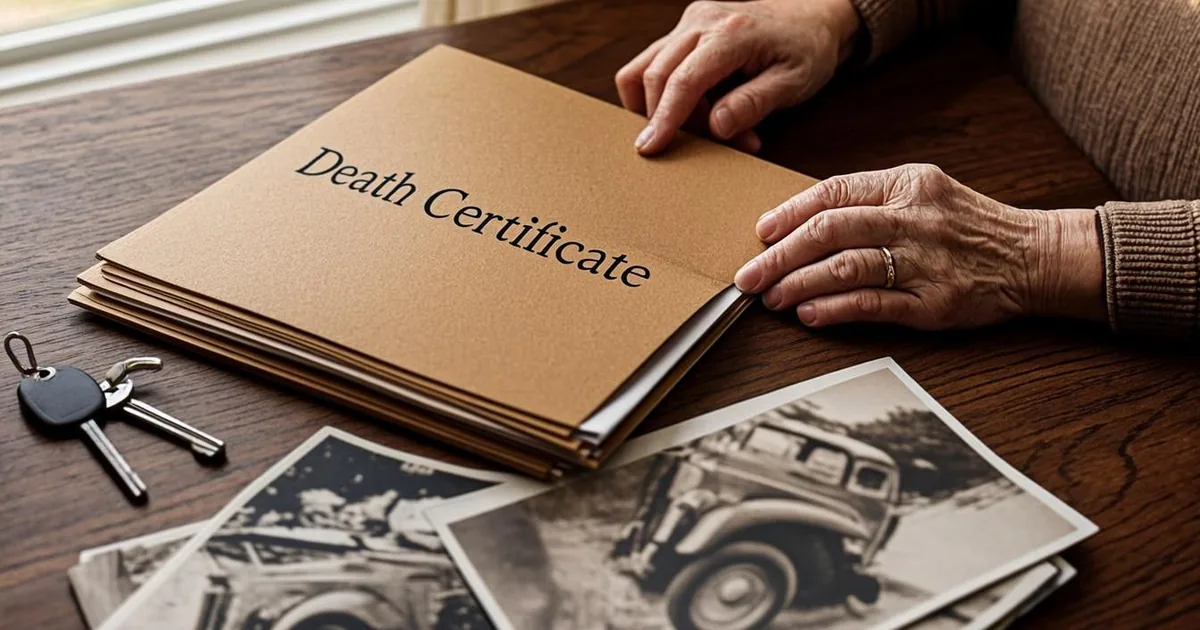
Certified copies of the death certificate are the fuel for all three. Every affidavit, court filing, and title application wants one attached, and photocopies are rejected exactly as they are in ordinary title work. Delaware's DMV, for example, requires original executor documents, and most states are similarly strict.
Find the will too, if one exists. A will does not transfer the car by itself, but it names the executor, and that person is the one who signs the title paperwork. No will means the court appoints an administrator, often the surviving spouse or an adult child, and the process runs through the same machinery.
Three Legal Paths to the Vehicle
Joint ownership with survivorship. If the title already reads "John Smith or Mary Smith" or "John Smith and Mary Smith with rights of survivorship," the surviving co-owner may not need probate at all. Many states let the survivor take the title with the death certificate alone, and a lost certificate simply means the survivor applies for the duplicate in their own name. Check the exact wording on the vehicle record, because "and" versus "or" changes the answer.
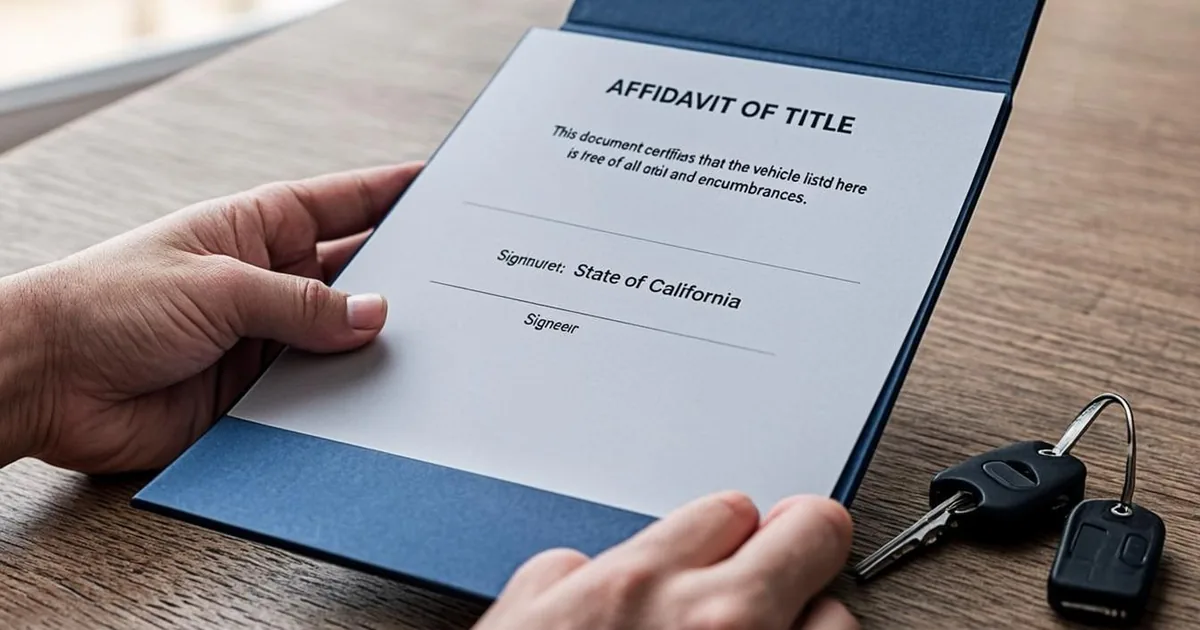
Small estate affidavit. Most states let families claim vehicles without probate when the whole estate falls under a dollar threshold. The affidavit names the heirs, swears to the facts, and attaches the death certificate. Texas pairs its motor vehicle heirship affidavit with the standard title application, and Travis County's tax office notes that you do not need the vehicle's title to inherit it, only the required documentation.
The affidavit rules differ more between states than any other piece of this process. Tennessee's inheritance guidance requires all heirs to sign the affidavit together. Alabama's revenue department uses a Next of Kin Affidavit, Form MVT 5-6, described in its deceased-owner FAQ. Some states cap the affidavit path by estate value, others by vehicle value only, and a few add a waiting period after death before the form can be filed. Read your state's version before drafting anything.
Formal probate. When the estate is large, contested, or the vehicle is just one asset among many, the court appoints an executor or administrator and issues letters testamentary or letters of administration. Those letters are your signing authority. The executor can then handle the vehicle the way the deceased would have: applying for duplicates where the state allows it in the estate's name, or transferring directly to a heir or buyer.
Probate costs real money and time, which is why families should not open one just for a car. Court filing fees, possible attorney involvement, and a public process that runs for months make it the path of last resort for a single vehicle. If the estate must go through probate anyway for the house or the accounts, adding the car costs little extra, and the executor folds it into the existing case.
| Situation | Key document | Who signs |
|---|---|---|
| Joint title with survivorship | Death certificate | Surviving co-owner |
| Small estate (under state limit) | Heirship affidavit + death certificate | All heirs, or the named affiant |
| Formal probate | Letters testamentary or administration | Court-appointed executor |
| Vehicle left to a named heir in a will | Will + probate order or affidavit | Executor, then the heir |
Replacing the Missing Title Inside the Estate
With authority in hand, the missing certificate gets handled one of two ways. Some states will issue a duplicate title in the estate's name, with the executor shown as the applicant. Others skip the estate duplicate entirely and let the paperwork move the vehicle straight from the deceased owner's record to the heir or buyer.
Georgia belongs to the second group, per its inherited vehicle guidance: a replacement cannot be issued in a deceased person's name, so the heir's application carries the transfer. Ask your state DMV which group you are in before paying any duplicate fee, because the wrong application gets rejected.
Where the estate route exists, the executor completes the state's standard duplicate application, attaches the letters and death certificate, and receives a certificate that the estate can assign forward. The signature line that was impossible to fill now has a legal signer.
The two routes also produce different paperwork for the heir. An estate duplicate creates an extra certificate, an extra fee, and an extra assignment step. The direct-from-deceased route compresses everything into one application, which is why several states prefer it and why the DMV clerk's answer to "can we skip the estate duplicate?" is worth more than any article, including this one.
The Document Checklist
Families lose weeks to repeat DMV trips, and almost always for the same reason: one missing attachment. Bring the full stack the first time and the counter visit usually ends with an acceptance stamp instead of a to-do list.
- Certified death certificates, at least two for the DMV alone.
- The will, if one exists, or a note that no will was filed.
- Court letters testamentary or administration, when probate applies.
- The completed heirship or next-of-kin affidavit, signed by every required heir.
- The vehicle's registration, plate number, or VIN from any old document you can find.
- Proof of insurance in the new owner's name for the registration step.
- Your photo ID, and payment for title, registration, and plate fees.
If the vehicle record itself is a mystery, the county can usually find it with the owner's name and date of death. Ask for a record search before assuming the title is truly untraceable, because vehicles with old registrations on file often have everything else retrievable.
The Full Sequence, Start to Finish
- Order certified death certificates. Five to ten copies covers affidavits, banks, insurers, and the DMV without reordering.
- Read the current title record. Joint survivorship wording, an active lien, or a transfer-on-death designation each shortcuts the whole process.
- Choose your legal path. Survivorship transfer, small estate affidavit, or probate, based on the estate size and the state's rules.
- Collect the authority documents. Affidavits signed by all heirs, or court letters for the executor, plus the death certificate originals.
- Deal with any lien first. A financed vehicle follows the lender path, and the active loan guide explains the payoff and release sequence.
- File the title application. Heirship forms plus the state's title application, or the estate duplicate first where allowed.
- Register and insure. Plates, registration, and insurance move to the new owner once the certificate issues.
Shortcuts Families Miss
Transfer-on-death designations are the cleanest path and almost nobody plans ahead for them. California, among other states, lets owners name a TOD beneficiary on the title itself, and the vehicle passes to that beneficiary with a death certificate and a simple form, no probate and no signature problem. Families handling future estates should add this to the to-do list now.
Many states also exempt close family transfers from some costs. Spouse-to-survivor transfers frequently skip sales tax entirely, and parent-child or sibling transfers often carry reduced fees. Ask the county title office which exemptions apply before paying sticker price on the taxes.
Surviving spouses sometimes qualify for a simplified spouse petition or affidavit even where heirs generally would not. The threshold documents are lighter, and some states let the spouse sign where multiple adult children would otherwise all need to appear.
Selling or Keeping the Vehicle
Heirs who want to sell should decide before the transfer, because the order of operations changes the taxes. Transferring into the heir's name and then selling means two sets of paperwork and possibly two tax events. In many states, an executor can assign an estate vehicle directly to a buyer, which keeps the chain clean.
Buyers of estate vehicles should expect the extra documents. A legitimate estate sale includes the death certificate or court letters alongside the title, and smart buyers ask for them early. Running the VIN through a history report also confirms the seller's story matches the record. The lost title before transfer guide covers what happens when an estate sale stalls on a missing certificate.
Keeping the vehicle usually means re-registering within a state deadline, commonly 30 days from the transfer, and updating insurance the day the title issues. Insurers will cover an inherited car temporarily, but the policy must match the registered owner once the paperwork completes.
When Nothing Works: The Bonded Title Fallback
Some estates resist every standard fix. The deceased owned the car decades ago, the record shows a lienholder that no longer exists, heirs are scattered, or documents were lost in a move. When the DMV cannot connect the dots, most states offer a bonded title path.
A surety bond, typically worth one and a half to two times the vehicle's value, backs an application that lacks the normal paper chain. The state inspects the vehicle, reviews whatever evidence exists, and issues a bonded title if the story holds. It takes months, but it ends the limbo.
Estate cases sometimes need that same heavy machinery for a different reason, and the general replacement guide and the bill of sale alternatives page explain how the bond process works when ownership evidence is thin. A car title's basic anatomy also helps here, because knowing what the state is reconstructing makes the document requests make sense.
An inherited car with a lost title is a solvable puzzle, not a dead end. Establish authority, let the affidavit or court letters do the signing, and follow the state's sequence. The vehicle that carried a lifetime of errands can carry yours, with paperwork to match.