A lost trailer title might not need replacing at all — half the country never titles light trailers in the first place. Florida skips titles under 2,000 pounds, New Jersey under 2,500, and Iowa registers sub-2,000-pound trailers with no title in the system. Whether you file a duplicate or just a registration depends entirely on your state's weight line.
When a title does exist, the replacement process mirrors the car process at a similar price — $39.50 in Washington, the same forms you already know. This guide covers both lanes: the weight-exemption states and the title-required states, plus the homemade-trailer and interstate wrinkles that trip up utility and equipment haulers.
First Question: Does Your Trailer Even Need a Title?
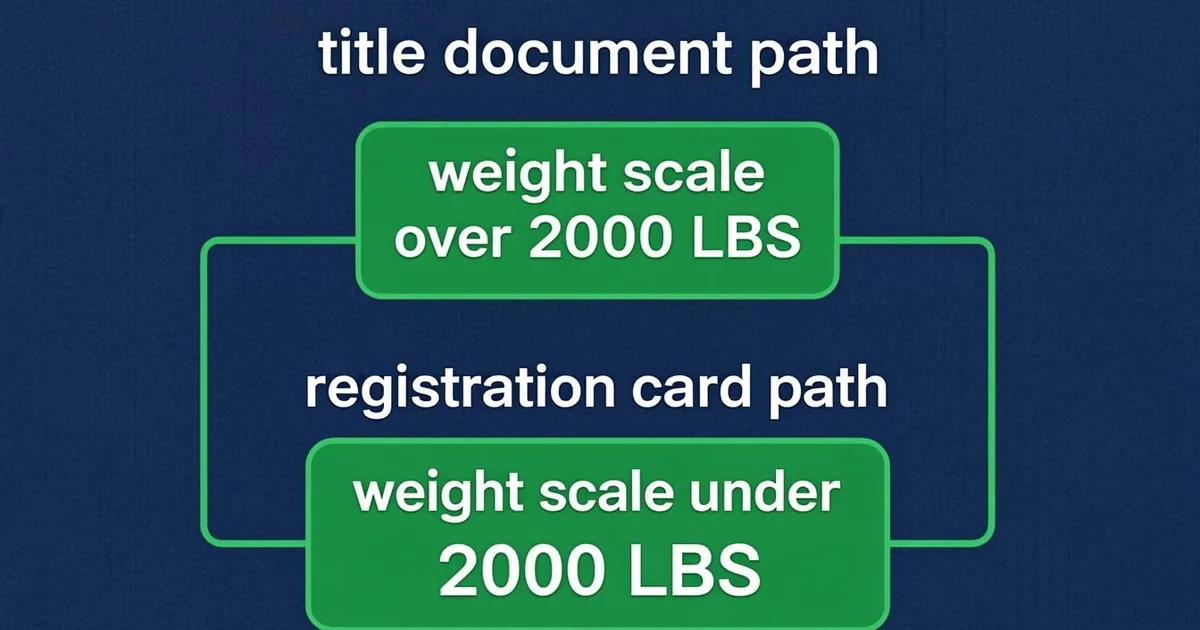
Trailer titling turns on unladen or net weight, measured empty of cargo. States set a threshold under which titles are optional or simply not issued. Know your trailer's empty weight before anything else — it is printed on the manufacturer's plate near the tongue.
| State | Weight Threshold | Rule for Lighter Trailers |
|---|---|---|
| Florida | Under 2,000 lbs net | No title required; registration still required |
| New Jersey | Under 2,500 lbs | Registered but exempt from titling |
| Iowa | 2,000 lbs or less | No title; registration only, $20 per year |
| Idaho | Under 2,000 lbs unladen | Title not required |
| Georgia | 2,000 lbs or less | Title not required; optional titles available |
Georgia adds a useful option: owners of light trailers can title them voluntarily even when the state does not demand it. A voluntary title builds an ownership record that pays off at resale or when the trailer crosses into a strict-title state. Iowa's registration-only approach still produces an annual $20 fee and a plate, so the trailer stays street-legal without ever seeing a title document.
Verify the current rule at the source before you rely on any threshold. The Georgia Department of Revenue publishes its exempt-and-optional list directly, Idaho ITD states its 2,000-pound line on the vehicle titles page, and county treasurer sites like Iowa's county treasurers spell out the registration-only path. Thresholds occasionally move with legislation, and a two-minute check protects a decision you will live with for years.
Replacing a Lost Trailer Title in Title-Required States
Heavy trailers — equipment haulers, car trailers, horse trailers, anything past the state's line — follow the standard duplicate-title workflow. The applicant, the form, and the fee barely differ from the car process described in how to replace a lost car title.
- Identify the issuing state. The trailer is titled where it was last registered, which is not always where it parks now.
- Complete the state's duplicate form. Washington uses the Affidavit of Loss/Release of Interest with all registered owners signing before a notary. Most states use their generic duplicate-title application with the trailer's VIN or serial.
- Pay the fee. Washington charges $39.50 for replacement trailer titles, identical to its vehicle rate. Other states charge the standard duplicate fee from $2 to $50.
- Apply online where possible. Trailers share the vehicle portals in most online states, so the same account that renewed your truck renews the trailer.
- Wait out the mail window. Standard processing runs one to four weeks depending on the state.
Liens complicate the picture exactly as they do for cars: a recorded lender receives the duplicate in many states, so clear the lien or bring the release first. The mechanics match lost title with an active loan.
Living in a No-Title State: The Registration Path
If your state exempts the trailer by weight, a lost title is a non-event — there may be nothing in the state database to lose. The actionable document is the registration, and replacing that is quick and cheap.
Iowa county treasurers issue registration-only certificates for sub-2,000-pound trailers at $20 per year, using the serial number and a bill of sale when ownership proof is thin. Florida registers untitled light trailers through its standard portal. New Jersey's MVC registers exempt trailers with the same forms it uses for heavier units minus the title step.
Homemade and Rebuilt Trailers: The VIN Problem
Homemade trailers often carry no serial number at all, which makes any paperwork — title or registration — impossible until the state assigns an identifier. Every state handles this through some flavor of inspection and assignment.
The typical sequence brings the trailer to a state police or DMV inspection lane, where an officer verifies it is not stolen property and stamps an assigned VIN or serial. That number then feeds the title or registration application. Weld quality, lighting, and brakes sometimes get checked in the same visit, since several states inspect homemade units for roadworthiness before they will register anything.
Rebuilt trailers that once carried a title follow the salvage path instead — inspection, rebuilt brand, then regular registration. Owners assembling trailers from parts of multiple donor frames face the hardest lane and should call the inspection unit before welding anything together, because frame provenance decides whether one VIN survives.
Moving a Trailer Across State Lines
Interstate moves expose the ownership-chain gaps that no-title states leave behind. A South Dakota buyer of a 1,500-pound Georgia trailer inherits paperwork that Georgia never required — and the new state may want a title immediately.
Strict-title states handle inbound untitled trailers through their bonded-title or assigned-title processes, which weigh proof of ownership against an inspection. Bring every scrap: the old registration, the bill of sale, the manufacturer's certificate of origin if it survived, and repair receipts. The stronger the paper stack, the faster the inspection lane moves.
Trailers titled in the old state simply follow the new-state transfer rules, usually with a VIN verification. Either way, start the paperwork before the move when possible — a former state can print duplicates far easier than a new state can reconstruct ownership from scratch.
Selling a Trailer When the Title Is Gone
Private sales stall on missing paper in title states, and sellers who fix the duplicate first get meaningfully better prices. Buyers discount no-title heavy trailers heavily because they price in weeks of bonded-title hassle and inspection fees. A $50 duplicate protects a four-figure sale price — the math is not close.
In registration-only states, selling stays simple. Hand over the registration, sign a dated bill of sale describing the trailer and serial number, and both parties keep copies. The buyer re-registers in their own name and the chain is clean. Never sign a plate or registration loose from a bill of sale — the pairing is what proves the transfer.
Sellers of exempt-state trailers moving them to strict states should volunteer the ownership file up front. Surprising a buyer with paperwork gaps after money changes hands is how small claims cases start. The pre-sale checklist in lost title before transfer applies to trailers the same way it applies to cars.
Abandoned and Junk Trailers: A Different Ending
Some trailers resurface after years in a field with no paper and no reachable owner. Those go through the abandoned-vehicle process instead of any duplicate route. State timelines vary, but the skeleton is consistent: report the abandoned unit to local law enforcement, wait the state's notice period with certified mail to the last known owner, then apply through the state's abandoned-vehicle or junk certificate path.
Ownership through abandonment ends with either a salvage-scrap certificate or a rebuilt path with inspection, depending on what you plan to do with the frame. Farmers clearing old implement trailers and landlords emptying storage lots run into this constantly, and the county sheriff's office is always the first call — starting the wrong way, like selling for scrap immediately, can create theft liability.
Insurance for Untitled Trailers
Light trailers usually ride on the towing vehicle's liability coverage, which is why no-title states get away with the exemption. The moment a trailer carries real value — horse trailers, cargo trailers with tools, equipment haulers — a standalone policy needs proof of ownership, and that is where the registration-plus-bill-of-sale file earns its keep. Insurers accept that pairing in registration-only states routinely.
Value-titled trailers need the actual title document for comprehensive coverage, so a lost title can stall an insurance claim as surely as a sale. Replace the duplicate before filing claims on any stolen or storm-damaged unit, and keep a copy of the title with the policy paperwork either way.
What Replacement Costs Across Common States
Trailer duplicates price like vehicles because most states file them identically. Use these verified 2026 anchors when budgeting.
| State | Trailer Title Path | 2026 Cost | Wait |
|---|---|---|---|
| Washington | Notarized affidavit, all owners | $39.50 | 2 to 4 weeks |
| Iowa (under 2,000 lbs) | Registration only, no title | $20 per year | Same day at county treasurer |
| Georgia (2,000 lbs or less) | Title optional | Standard title fee if requested | Same day to 2 weeks |
| Idaho (under 2,000 lbs) | Title exempt | Registration fee only | Same day at county DMV |
| New Jersey (under 2,500 lbs) | Registration without title | Standard registration fee | Same day at agency |
The pattern repeats nationwide: light trailers cost almost nothing to keep legal, heavy trailers inherit the full title apparatus. The expensive mistakes happen when owners assume the wrong lane and pay for services their trailer never needed.
Trailer Paperwork Questions Answered
These are the questions utility and equipment haulers ask most. The weight table above resolves half of them instantly; the rest depend on your state's exact threshold.
What If the VIN Plate Is Missing Too?
Rusted or stripped tongue plates are common on trailers older than a decade, and they complicate every path above. The fix runs through the same inspection lane as homemade units: bring the trailer, any surviving paperwork, and photos of the frame to the state inspection station, where an officer traces existing stamps or assigns a new identifier. Budget a half-day for the visit and call ahead — some states run these lanes by appointment only.
Serial numbers also hide in secondary spots on many trailers. Check the frame rails near the axles, the inside of the coupler, and any surviving body panel stamps. Manufacturers often stamped twice, and finding either number is enough for a duplicate application without an inspection visit.
Can a Storage Lot or Tow Company Force a Sale of My Trailer?
Liens from storage and towing are real and follow state notice rules. If a lot claims unpaid fees, it can start a lien foreclosure that ends in a sale of your trailer regardless of where the title sits. Paying under protest and disputing later beats losing the unit at auction — and contesting the lien requires the ownership paper, which is one more reason the replacement duplicate matters before the dispute starts.
Owners recovering impounded trailers should ask the lot for the exact statutory basis of the fees in writing. States cap storage rates and notice periods, and lots that skip the certified-mail steps lose their lien claim entirely. That statute lives on your state legislature's site, not the lot's price board.