A lost RV title stops a motorhome sale dead. The fix costs $2 in Texas and $39.50 in Washington, and in Michigan you can walk out with a same-day copy for $20. Which bucket your rig falls into — motorized or towable — decides everything else.
This guide covers the 2026 replacement process for Class A, B, and C motorhomes, travel trailers, and fifth wheels. You will see the exact forms, fees, and wait times that matter for recreation vehicles. Everything here comes from state DMV pages, not forum folklore.
Is an RV Title Different From a Car Title?
A self-propelled motorhome is titled exactly like a passenger car in every state. Class A diesel pushers, Class B camper vans, and Class C rigs with the cab-over bunk all follow the standard vehicle title process. The certificate of title lists the VIN, owners, and any liens, and a duplicate follows the same rules.
Towable units are the exception. Travel trailers, fifth wheels, pop-ups, and park models are usually titled under each state's trailer rules instead. Some states skip the paper entirely for lighter units, which changes your options when the paperwork disappears.
Motorhomes also carry a chassis VIN and sometimes a coach number. The title follows the full vehicle VIN from the chassis, not the coach serial. That 17-character VIN (standard since 1981, per NHTSA) is what the DMV clerk will type into the system.
How to Replace a Lost RV Title: The Core Process
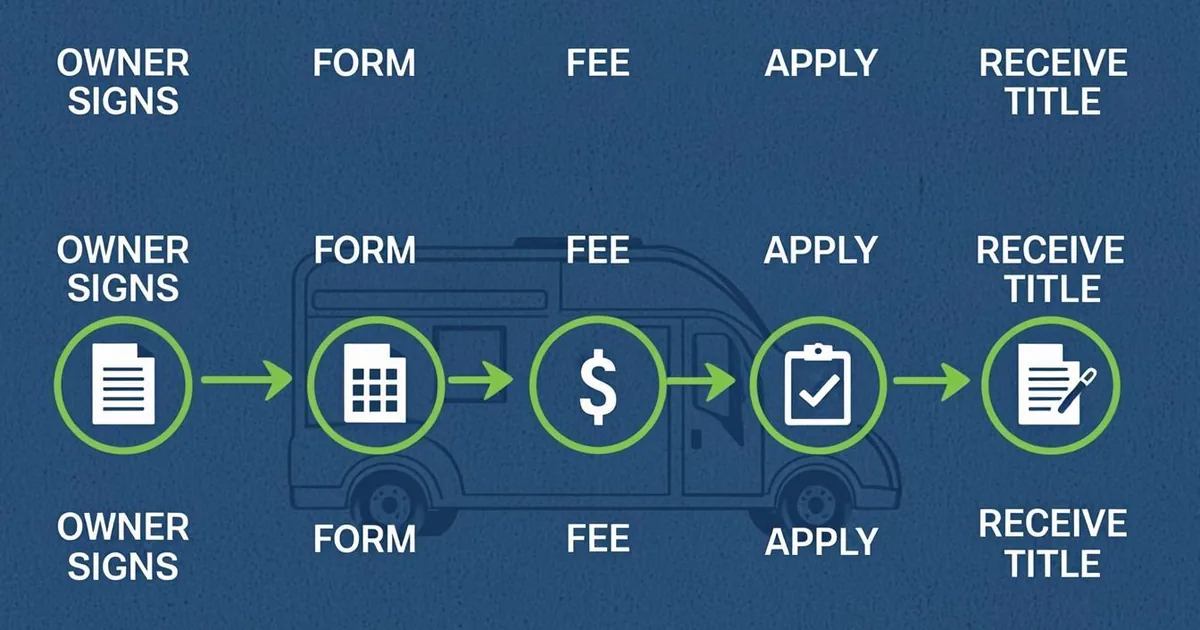
States differ on portals and paperwork, but the skeleton is the same everywhere. Complete these five steps and the duplicate lands in your mailbox.
- Confirm the owner list and lien status. Every owner named on the title usually has to sign. Texas requires all recorded owners on Form VTR-34, and South Carolina mails the duplicate to the lienholder when a lien shows on record.
- Pull the right state form. Texas uses the Application for a Certified Copy of Title (VTR-34). Washington uses the Affidavit of Loss/Release of Interest. Michigan runs the request through its online Secretary of State account. New York does the duplicate straight through its DMV transaction portal.
- Gather identity proof. Texas wants a photo ID copy for every owner. Washington requires notarization on the affidavit. Most in-person counters just want your driver's license and the last five VIN digits.
- Pay the duplicate fee. Fees range from $2 to $50 depending on the state and service level. Online orders usually add a small processing charge.
- Apply and wait out the mail time. Wisconsin issues replacements in 7 to 10 business days after the online application. Michigan mails titles in about 14 days unless you pay for an instant print.
What a Replacement RV Title Costs in 2026
Duplicate fees for motorhomes match car fees in nearly every state, because the DMV treats the unit as a vehicle. Here are verified 2026 numbers from official state pages.
| State | Duplicate Fee | How to Apply | Typical Wait |
|---|---|---|---|
| Texas | $2 (certified copy, VTR-34) | Mail or in person | About 2 weeks |
| Michigan | $15; $20 instant | Online or SOS branch | 14 days by mail; same day at a branch |
| New York | $20 | Online, mail, or office | 7 to 10 business days |
| Washington | $39.50 | Notarized affidavit by mail or office | 2 to 4 weeks |
| Illinois | $50 | VSD 190 application | 2 to 3 weeks; next-day expedited printing available |
| Indiana | $15; +$25 speed title | BMV branch or mail | About 2 weeks standard |
| Idaho | $14; +$26 rush | ITD 3367 by mail or county DMV | About 3 weeks standard |
| Wisconsin | $2 | Online application | 7 to 10 business days |
Two patterns stand out. First, the fee spread is enormous — Wisconsin charges $2 while Illinois charges $50 for the same piece of paper. Second, online states are dramatically faster than mail-only states, so start there whenever the option exists.
The Fastest Ways to Get a Duplicate RV Title
Speed comes from three levers: the application channel, the state's print queue, and whether you can prove identity without follow-up calls. Buyers with a closing date need to stack all three.
Michigan sells a same-day instant title for $20 at Secretary of State branches, which is the cleanest option when a buyer is standing in your driveway. Indiana's $25 speed title moves an application to the front of the BMV queue. Illinois guarantees next-business-day printing when the expedited application arrives before noon.
Online portals also cut weeks. New York's transaction page, Michigan's online account, and Wisconsin's duplicate service all skip the mail leg entirely. Washington is the slow lane — the notarized paper affidavit still rules there, so build in a month.
California runs its duplicate through the DMV virtual office with a driver's license and the last five VIN digits, which trims the trip to a branch. Texas keeps the certified-copy route on paper, but the $2 fee and two-week turnaround beat most states anyway. Match the channel to your deadline: online states for speed, cheap-mail states when the sale is months out.
Documents to Line Up Before You Apply
Clerks approve clean packets on the spot and bounce everything else. Get these together before you touch a form, because several of them take days to collect.
- Current registration — it confirms the VIN, owner names, and issuing state in one page.
- Driver's license or state ID for every recorded owner.
- Lien release letter or payoff statement if the loan was recently settled.
- Bill of sale from your purchase, useful whenever DMV records lag behind a prior transfer.
- Payment method accepted by that office — some county counters skip cards for small fees.
Texas asks for a photo ID copy from every recorded owner on the VTR-34, which surprises two-owner couples who send one license. Washington requires every registered owner to sign before a notary. A five-minute phone call to the county office catches these requirements before they cost you a mailing cycle.
When the Motorhome Still Has a Lien on It
A recorded lien changes where the duplicate goes. South Carolina sends it straight to the lienholder, not to you. Texas will not let lienholders use the certified-copy route for payoff situations at all — the lien release has to happen first.
Most lenders will accept a duplicate request signed by both the borrower and the lienholder, then hold the paper until payoff. If you are selling a financed motorhome, read lost title with an active loan before you collect money. The order of operations there protects both sides of the deal.
Electronic lien and title states add a wrinkle: more than 40 states now record liens digitally under ELT programs tracked by AAMVA. In those states there may be no paper title to lose at all — the lienholder controls an electronic record until payoff clears.
Buying an RV With No Title at All
Aging motorhomes change hands informally, and buyers inherit the missing paper. The path out is a bonded title in most states, and the requirements are stricter than a simple duplicate.
Texas, for example, routes no-title situations through the Bonded Title Application (Form VTR-130-SOF) plus supporting evidence of ownership: bills of sale, invoices, or canceled checks. The state may also require a vehicle inspection or VIN verification before it bonds anything. Bond amounts usually track 1.5 to 2.5 times the vehicle's value.
Never pay for a rig where the seller promises "the title will show up." Get the duplicate process moving before money changes hands, or use the pre-transfer checklist to structure the deal safely. A seller who cannot produce any title in three weeks will not produce one in three months.
Special Cases: Salvage, Out-of-State Moves, and Old Units
Salvage history complicates replacement. When an insurer totals a motorhome — common, because coach repairs routinely exceed 50 percent of unit value — the title gets a salvage brand. Repairing it means a rebuilt-brand title through your state's inspection process, and that paperwork path is separate from a plain duplicate.
Moving a motorhome to a new state does not require the old title if it is lost, but the new state will want proof of ownership before it issues its own. Bring registration, bill of sale, and ID, and expect a VIN verification. Units coming from no-title trailer situations face the same scrutiny — see lost trailer title replacement for how towables are handled.
The issuing state is the only one that can print your duplicate. If your coach still carries a Wisconsin title from a sale ten years ago, Wisconsin's online duplicate service is where you apply — your current state's DMV cannot reach into another state's records. This trips up owners who moved repeatedly and never re-titled. The Wisconsin DMV lists the 7-to-10-day window right on its duplicate page, which is typical of online states.
Out-of-state duplicates by mail also need correct fees from the issuing state, not your state. Mailing a $20 check for a $39.50 Washington affidavit simply stalls the file for weeks until someone calls you.
Very old coaches hit a different wall: titles issued decades ago under owners who have since died. Estate situations need the inheritance route instead, covered in lost title for an inherited vehicle. Expect extra probate or heirship documents at the counter.
Mistakes That Delay an RV Duplicate Title
Most rejected applications fail on the same handful of issues. Fix these before you mail anything.
- One owner signs while the title lists two — get every recorded owner's signature.
- The VIN on the form comes from the coach plate, not the chassis — use the full 17-character chassis VIN.
- No notarization where the state demands it, like Washington's affidavit.
- Lien still on record with no release letter attached from the lender.
- Payment amount wrong because the fee changed — check the state fee page the same week you apply.
- Applying in your state when the RV is titled in another one; duplicates come from the issuing state only.
Clear applications move fast. Incomplete ones bounce back through the mail, burning weeks on each round trip.
Questions RV Owners Ask Before Filing
The questions below come up in nearly every lost-motorhome situation, from cost surprises to lienholder control. If yours is not listed, the state fee tables above link the official pages with phone numbers.