
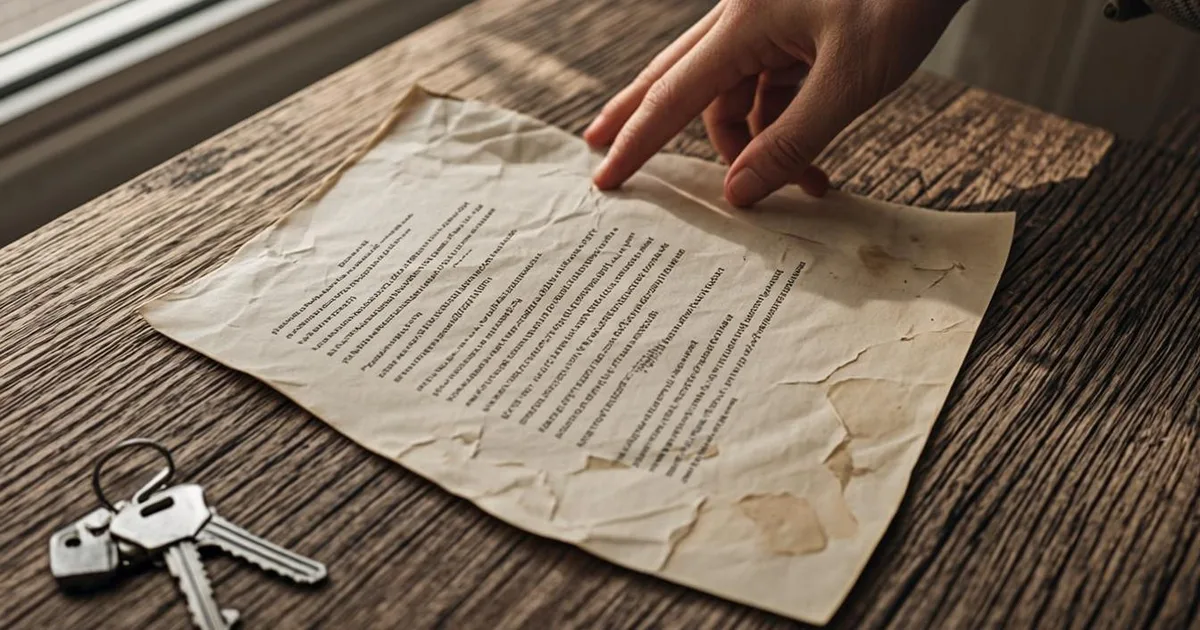
A title can survive thirty years of ownership and still meet a bad end. The washing machine gets it, or the glovebox in a car door left open during a storm. Sometimes it is a toddler with access to crayons.
Now the document that proves ownership has a coffee ring through the VIN. Or a tear runs through the signature area, or text has faded to the color of weak tea. The question at the DMV counter is suddenly binary.
Is this title still legible enough to transfer, or does it need to be replaced first? This guide draws that line precisely, then covers the replacement process for damaged titles. Replacement differs from the lost-title process in ways that matter. And when the certificate never arrived at all, our title never came in the mail guide walks the mailing-window checks first.
Surrender requirements change, and fee differences matter—some states replace damaged titles free or cheap. There are also alteration rules that turn an innocent repair attempt into a rejection. Knowing them protects both your money and your timeline.
Table of Contents
- The Line Between Worn and Illegible
- The Repair Rule: Why You Do Not Fix It Yourself
- Replacing a Damaged Title: The Process
- Special Damage Cases: Fire, Water, and Time
- Storing the Replacement So This Never Happens Twice
- When Damage Meets the Insurance Claim
- The Heirloom Title
- Damaged After Signing: The Gray Zone
- The Bottom Line
The Line Between Worn and Illegible
DMVs judge titles by what they must verify from them. Those elements are the VIN, the owner names, the lien information, and any unexecuted assignment section the next transfer needs. A title passes as long as those elements are readable and unaltered.
Cosmetic damage does not impair function. A soft corner, a coffee stain on the margin, or a water mark that left the text intact. So does a crease from decades in a glovebox.
Clerks process worn titles like these every day without comment.
The line gets crossed when verification fails. A VIN with characters obliterated or obscured fails, and so do owner names that cannot be confirmed. Damaged lien sections raise release questions, and damaged assignment areas block the next transfer.
Either flaw makes the title unusable for its next job. A photocopy of the damage changes nothing at the counter. What matters is whether the original still supports verification.
Here is the general test: if a stranger could transcribe every critical field after a squint, you are probably fine. If you are explaining what the smudged digit "probably says," you are not.
The Repair Rule: Why You Do Not Fix It Yourself
The instinct after damage is to restore. Owners trace over faded characters with pen, tape the tear, or laminate the document to stop further decay. Every impulse creates a worse problem, because altered titles sit in the same category as forged ones at the DMV.
Handwriting that matches the document's original printing is an alteration. Adhesive over any printed area, or lamination, is another. Any of these converts a replaceable title into a suspected-fraud case needing more paperwork than the damage ever justified.
Tape deserves its own warning. It obscures whatever is underneath, and obscuring is indistinguishable from concealing. A tear through the margin is cosmetic; the same tear under tape is a title the clerk cannot fully read.
The legal path for every category of damage is replacement, and replacement is routine. The state wants its records to carry a clean, verifiable document as much as you do.
Replacing a Damaged Title: The Process
The damaged-title replacement runs on the state's duplicate or replacement-title process. One addition applies: the damaged original gets surrendered. That surrender lets the state retire the damaged document so no two versions circulate.
The sequence:
- Use the state's replacement application — the same form family as duplicate titles, with a "damaged/mutilated" category alongside "lost."
- Surrender the damaged title with the application where the state requires it. Most states do, and the surrender is why damaged replacements often process faster than lost ones.
- Pay the fee. Several states charge reduced fees or nothing for damaged-title exchanges (the state prefers the clean copy too). Others charge the standard duplicate fee of $10-$30. The state guides hub lists each state's number.
- Verify the record is clean first. If the state's file shows a lien or an old error, resolve it before applying. The replacement inherits whatever the record carries.
- Receive and store the new title properly. The replacement is a full-validity document. Storage habits that would have saved the original are covered at the end of this guide.
Processing times mirror standard duplicate work—days to weeks depending on the state. A growing number of states process the whole exchange through online portals, with the damaged original mailed in or uploaded.
Some states also ask for current registration and photo ID with the form. Check that checklist before you drive over.
Where the damage is minor but you are replacing preemptively before a sale, ask the counter clerk first. The clerk can often tell you whether the title would actually survive a transfer. That answer is worth more than the fee you might be about to pay.
Special Damage Cases: Fire, Water, and Time
Fire and flood damage raise the stakes because they rarely stop at the title. The vehicle's records, and sometimes the vehicle itself, are involved.
After a fire or flood, the title work may intersect with insurance-total decisions and salvage branding. A car totaled by insurance changes hands to the insurer with different paperwork entirely. So the title replacement should wait until the vehicle's status is decided.
Our guide on ownership documentation in irregular situations covers the evidence questions that follow. It walks through proving ownership when the usual papers are gone.
Simple water damage to the paper alone—a soaked folder, a laundry incident—follows the standard replacement above. One caution applies: water-warped titles sometimes dry legible, then keep deteriorating as the paper weakens.
If the document dried readable, replace it anyway before the slow fade completes the job. A preemptive exchange costs less than an emergency one before a sale.
Age-related fade is the quiet one. Titles from the 1970s through 1990s used inks and papers that fade in sunlight. A title stored on a windowsill for thirty years can arrive legitimately unreadable through no one's neglect.
The replacement process is identical, but owners of older vehicles should check theirs now. The fade is progressive, and catching it early makes the difference between a routine exchange and a documentation project.
Storing the Replacement So This Never Happens Twice
The replacement title deserves better than the folder that failed the last one. The rules are unglamorous and effective. The title lives in the house, not the car—gloveboxes produce exactly the damage this guide describes.
A fire safe or a dedicated document folder with the insurance papers gives it a fixed address. Family members can find it there. A scan or photograph stored with your digital records reduces even a catastrophic loss to a form-filling exercise.
Resist the lamination impulse permanently. A replacement title goes back into the same storage system, where its enemies are sunlight and moisture rather than handling.
For context on why this single paper anchors insurance, resale, and registration, our title explainer covers the document's role. The application guide covers what filings ride on it. If the title has gone missing rather than damaged, the standard lost-title replacement process is the sibling of everything above.
When Damage Meets the Insurance Claim
The insurance question follows damage cases more often than owners expect. The title document and the insurance claim intersect at one shared word: vehicle. The garage fire, the flood, or the fallen tree can damage the car and its paperwork in one event.
In that situation, the car may be headed toward an insurance total-loss declaration regardless of the paperwork. Sequencing matters: the claim resolves the vehicle's status first, and the title work follows the claim's outcome. Filing a replacement title for a vehicle the insurer is about to brand and auction wastes the fee.
Filing after the insurer releases the vehicle back produces the document the rebuilt process needs. Owners in the combined-damage situation should tell both the insurer and the DMV the full story. Each conversation moves faster when it knows the other is happening.
The state's title pages explain how branded and salvaged paperwork returns. California's page at dmv.ca.gov is a representative example. The insurer's total-loss process and the state's title options converge on the same document from opposite directions.
The Heirloom Title
The heirloom case is the quiet version of damage. The title survived the original owner and faded through decades of a drawer. It carries sentimental weight alongside its legal function.
Families sometimes resist replacing such a document, because the original feels like part of the car's story. The compromise: replace the title through the standard process, and let the original live in the family's archive.
The state's records need the clean document; the family's records keep the artifact. The two coexist comfortably. The story survives in better condition than the paper ever would.
Damaged After Signing: The Gray Zone
One boundary case arrives at every DMV: the title damaged after signing. A transfer executed correctly and then rained on, torn in transit, or stained before filing sits in a gray zone. The signature is real, the damage is real, and the clerk's discretion decides which matters more.
Some states accept a legible damaged assignment with a statement explaining the condition. Others demand re-execution on a fresh document.
The owner holding that envelope should call ahead rather than gamble the mailing. The answer determines whether the fix is a cover letter or a duplicate-and-resign. The ten-minute call is the only cheap version of this problem, and it exists in every state.
The desk clerk who hears the story can name the rule. No rejection letter ever does.
The Bottom Line
The through-line of this guide is a single principle: the title's job is to be read. Damage that leaves the critical fields legible is cosmetic, and cosmetic damage is free. Damage that obscures the VIN, the names, or the signature areas is functional.
Functional damage costs a replacement fee and a mail cycle. Every decision—replace, surrender, or repair the process—flows from whether the title can still do its job.
The owners who check their titles annually catch the fade and the water damage at the cosmetic stage. A thirty-second look at the folder that matters most keeps replacements on a schedule instead of in a crisis.
The document's whole value is legibility; the owner's whole job is noticing when it fades.