A lost title is annoying at the best of times. Discover it's missing the same month you move to a new state turns annoying into a countdown, because most states give new residents 30 to 90 days to register — and registration requires a title record.
You have two roads: replace the title through your old state before switching over, or apply directly in the new state where some DMVs will process the out-of-state duplicate and transfer together. This guide covers when each option works, what the VIN inspection adds to the process, and how to keep the new-state deadline from expiring while paperwork crawls.
First Decision: Which State Handles Your Replacement?
The title record lives with the state that issued it. If Texas titled your car, only Texas can print a replacement Texas title. That document then becomes the starting point for the new state's transfer. This is why the default advice is to fix the title with the old state first, then present it to the new one.
The exception is the group of states that will accept an out-of-state application as part of a new-resident title transfer. New York, for example, processes a first-time title and registration for new residents even when the out-of-state title never arrives — with extra identity documents and a MV-103 odometer statement for older vehicles. California will issue a California title on the out-of-state record itself when you verify the VIN and complete its application, which effectively replaces the missing paper.
Option 1: Replace Through the Old State First
This route takes longest but produces the cleanest result. You apply for a duplicate title from the old state, receive it, then do a normal out-of-state transfer at the new DMV. Most old-state duplicates arrive in 1 to 6 weeks depending on whether the state offers expedited service.
Most states let you apply by mail, which matters here because driving back is rarely an option. A handful — like Illinois with its VSD 190 process — also allow online orders with faster turnaround. Expect to provide the old address on the application even though you've moved; title records follow the vehicle, not your forwarding address.

Option 2: Apply Directly in the New State
Several states will convert a lost-title situation into a fresh title at the same counter visit. The new DMV queries the national title database, confirms the last titled owner, and issues its own certificate once you pass the identity and VIN checks. You never touch the old state at all.
The trade-off is scrutiny. Bring every ownership document you own: the old registration, insurance cards, the purchase contract or bill of sale from when you bought the car, and a photo ID matching your new address. The DMV uses these to connect you to the vehicle record that the missing title would have proven.
The Registration Deadline Is the Real Clock
Every state sets a window for new residents to register their vehicles. The most common is 30 days from establishing residency — New York, Texas, and California all use 30 days. Some states stretch further, and a few count from employment or home purchase rather than the move date itself.
Missing the deadline usually costs late fees rather than legal trouble, but the fees compound monthly in several states. If the duplicate will take longer than your window, ask the new DMV about temporary permits or registration extensions. Many issue a short-term permit so you can legally drive while the title paperwork clears.
| State (new resident) | Deadline | Lost Title Path | VIN Verification |
|---|---|---|---|
| California | 20 days | Direct retitle with VIN verify | Required (CHP or DMV) |
| Texas | 30 days | Old-state duplicate first | Safety inspection |
| New York | 30 days | Direct first-title allowed | DMV verification |
| Florida | 30 days | Old-state duplicate first | VIN + HSMV 82042 if needed |
| Arizona | First AZ use | Direct retitle allowed | Level 1 inspection possible |
Confirm your state's current numbers before relying on them — deadlines and fee schedules shift each session. The pattern to remember is the split: some states retitle directly, others insist the old state produce the duplicate first.
The VIN Verification Step
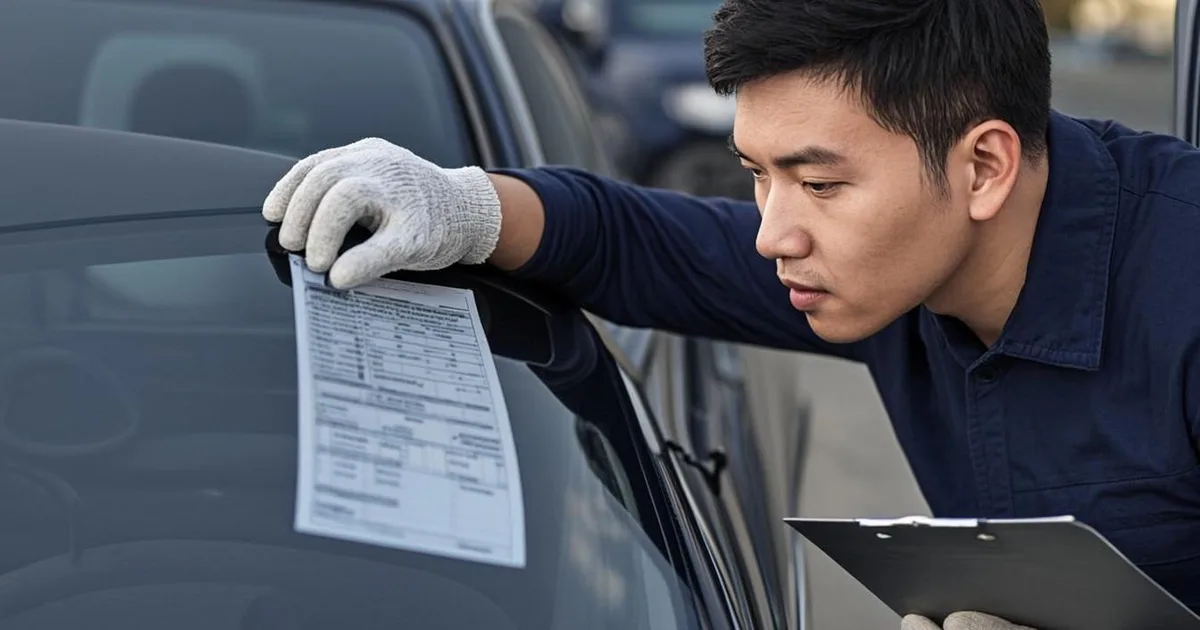
Lost titles raise fraud concerns, so states add a physical VIN inspection before issuing a fresh title to a new resident. An officer, DMV inspector, or authorized station confirms the 17-character VIN on the dashboard and door jamb matches your documents.
California requires verification through the DMV or Highway Patrol for out-of-state vehicles. Arizona sends some applicants to a Level 1 inspection, especially if the title history shows gaps. Texas and Florida bundle the check into their safety inspection or registration process. Budget an extra visit for this step — it rarely happens at the same counter as your paperwork.
If a Lender Is Involved
Active loans change the math completely. In electronic lien title states, the old state's record shows the lienholder electronically, and the new state can often see it — but the paper title doesn't exist for you to lose in the first place. Contact the lender for a lien release or a documented permission-to-move letter before filing anything.
If the loan is paid off and only the release paperwork is missing, our guide on a lost title with an active loan explains how to pull the release from the lender and clear the record. Moving mid-loan without telling the lender is a quick way to freeze the title entirely, since lienholders get skittish about vehicles crossing state lines.
Your Moving-Plus-Lost-Title Checklist
- Old state registration and any insurance cards proving your ownership period
- Purchase paperwork — bill of sale, buyer's order, or prior title copy if you have one
- Government photo ID showing the new state address (or two proofs of residency)
- Lien release letter from the lender, if the car was financed and paid off
- Completed new-resident title application and VIN verification form for the new state
- Payment for title, registration, and any use tax the new state assesses
If the old registration is also gone, the lost title and lost registration combination has its own fix-it order — title first, then registration, and never the reverse. And if you bought the car from a private party recently without ever receiving the title, the situation shifts to the seller's obligation described in our bill-of-sale transfer guide.
What If the Old State Wants Its Title Back?
A handful of states — New York is the best-known example — require new residents to surrender the out-of-state title during the transfer. If that title is already lost, the surrender requirement collides with the replacement process, and the state's workaround matters. New York handles it by letting the applicant explain the missing title on the application and submit extra ownership evidence instead.
Call the new state's DMV and ask the exact question: "Do you require surrender of the out-of-state title, and what replaces it if the title is lost?" The answer decides whether you need a duplicate from the old state at all. Some states keep the surrendered title on file; others mail it back or destroy it after digitizing, which is why the old-state duplicate can't always be ordered after a surrender.
The order of operations for surrender states: resolve the lost title first, then surrender the replacement during the transfer. It adds a few weeks but prevents the bureaucratic dead-end where neither state can produce the document the other one wants.
Insurance and Address Rules After the Move
Insurers follow the garaging address, not the old plates, and moving states without updating coverage is technically misrepresentation in most policies. The new state's minimum coverage limits apply from the day you establish residency, and a claim filed under the wrong state's assumptions can reduce payouts.
The smooth sequence: get a quote from the new state before the move, bind the policy effective on arrival, then register within the deadline using the new policy card. Some states verify insurance electronically against their own database, so a policy from the old carrier listing the old address gets flagged at the counter.
Bundle the DMV and insurance updates in the same week and both records agree from day one. The alternative — driving for months on old plates and old insurance while the title issue "sorts itself out" — stacks violations that surface together at the worst possible traffic stop.
For the authoritative deadline in your new state, the DMV's own site is the only source that counts — New York's new-resident rules live at dmv.ny.gov, Florida's at flhsmv.gov, and Arizona's at azdot.gov.
If the move includes a leased vehicle, the title question vanishes — the lessor owns it — but the registration question doesn't. Most lease contracts require notifying the lessor of any address change, and some states want the lessor's consent registered before a new-state plate issues. A quick call to the lease company prevents the only title-adjacent surprise movers with leased cars face.
Mistakes That Turn This Into a Months-Long Mess
The biggest one is waiting. Duplicate titles get slower when records show an address change the system can't reconcile, and new-resident late fees accrue in the background. File the duplicate or the direct transfer within days of unpacking, not weeks.
The second mistake is registering the car in the new state using someone else's address to dodge insurance rates. Insurers and DMVs cross-check, and a mismatch can void the policy exactly when the missing-title investigation needs it most. Our general replacement walkthrough keeps every step in one place if you want the full standard process, and our state-by-state title pages list the specific deadlines and fees for wherever you landed.
Seasonal movers get a special warning. Snowbirds who register in two states alternately must keep insurance and registration aligned in whichever state the car currently sits in — a vehicle "living" in Florida on New York plates for eight months collects both late fees and audit letters. If the move is permanent, complete the transfer; if it's seasonal, both states' DMVs publish part-year resident rules worth reading.
Finally, photograph everything before the old registration and insurance cards go in a drawer — including the odometer and the VIN plate. When the old state's duplicate application asks for details you no longer remember, your own photos are the fastest source, and they cost nothing but thirty seconds at unpacking.
Finally, don't sell the car mid-process. A sale without a title in hand transfers the problem to a buyer who will demand money back, and unwinding it costs far more than the patience to finish your own retitle first.