A Hawaii vehicle title does not come from one state office. Four counties — Honolulu, Hawai'i, Maui, and Kauai — each run their own title desks, set their own fees, and enforce their own paperwork habits. The duplicate that costs $5 in Hilo runs $12 on Maui and requires a notary on Kauai.
That county split surprises newcomers more than anything else about island car ownership. This guide maps every county's 2026 fees, the transfer windows that trigger $50 penalties, and the out-of-state registration path most mainland arrivals face. All numbers come from the county motor vehicle pages themselves.
How Hawaii Titles Vehicles: Four Counties, One State
Hawaii has no statewide DMV counter for title work. The state government sets registration minimums and keeps the title records database, but the four county offices handle applications, duplicates, and transfers in person. Your island of residence decides where you file.
Start from the official desks: Honolulu's Department of Customer Services, Hawai'i County's Vehicle Registration and Licensing, Maui County DMVL, and Kauai County's duplicate title page. Bookmark the one for your island — every fee and form in this guide lives on those four sites.
Each county prints its own fee schedule on top of state fees. Kauai notarizes duplicate applications as a rule. Hawai'i County charges $5 for most title work and tacks on $50 when transfers miss the 30-day window. Honolulu, the largest office by volume, publishes appointment slots because walk-in demand overwhelms its counters.
The county structure also matters when a vehicle moves between islands. An Oahu title transferring to a Hilo owner goes through Hawai'i County's transfer process, and that office explicitly asks for out-of-county certificates before it issues new paperwork.
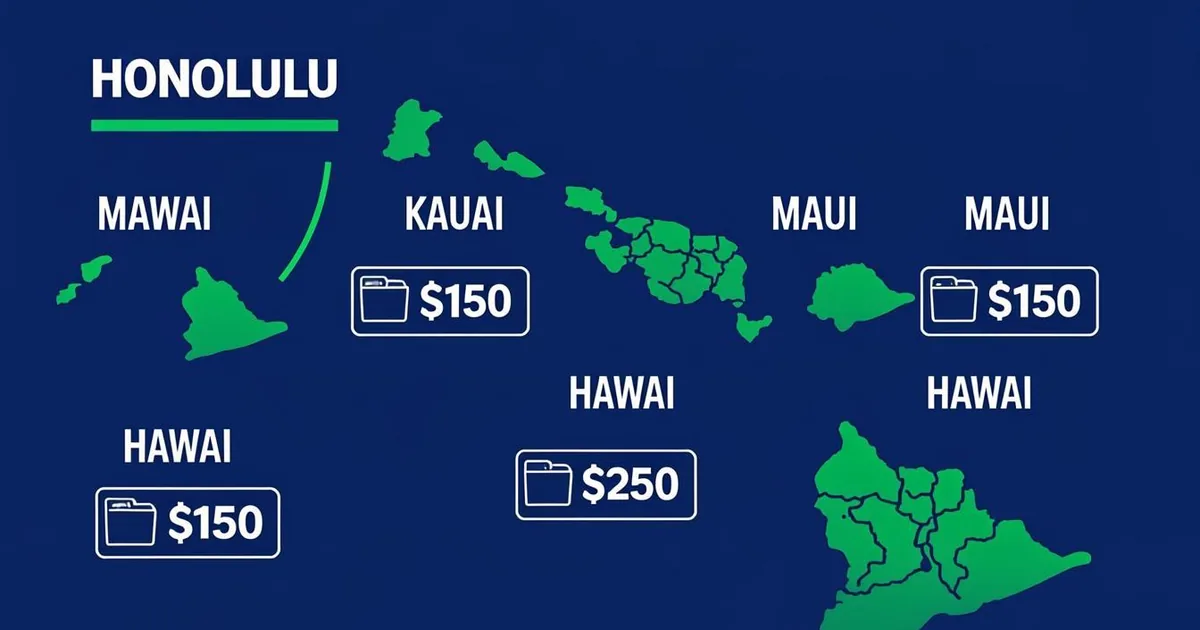
2026 Hawaii Title and Transfer Fees by County
County fee schedules vary enough that guessing costs money. Here are the verified 2026 figures from each county's official pages.
| County | Title / Transfer Fee | Duplicate Title | Notes |
|---|---|---|---|
| Honolulu (Oahu) | $10 transfer within 30 days | County-set fee | Late or expiring registration adds charges |
| Hawai'i (Big Island) | $5 transfer | $5 ($10 with lien removal) | $50 late fee after 30 days, plus delinquent taxes |
| Maui County | County transfer fee applies | $12 | Covers Maui, Molokai, Lanai |
| Kauai | County transfer fee applies | $10, notarized application | DMV service cutoff 8:45 a.m. for many counters |
Honolulu's $10 transfer fee holds only when the seller's registration is current. If the last registration has expired or lapses within 45 days, the buyer owes additional fees at transfer. Hawai'i County runs the opposite problem — its base fee is low, but the $50 late penalty after 30 days is the steepest in the state.
Registration itself layers state and county charges. Oahu owners pay a $46 state registration fee plus a $20 county fee, and county weight taxes add pennies per pound on top. A 4,000-pound passenger car in Honolulu carries a combined weight tax of 8.75 cents per pound — about $350 before other charges.
Replacing a Lost Title in Hawaii
Lost titles are a county fix, and the paperwork differs island by island. File in the county that issued the current title.
- Get the county's duplicate application. Kauai publishes its Application for Duplicate Title online; the other counties hand out equivalents at their motor vehicle offices.
- Notarize where required. Kauai requires a notarized document before it processes anything. Hawai'i County's simple duplicate request avoids the notary when no lienholder change is involved.
- Pay the county fee. Budget $5 on the Big Island, $12 on Maui, $10 on Kauai, and the current Honolulu rate for Oahu titles.
- Add $10 if a lienholder comes off. Hawai'i County charges the higher rate when the duplicate also removes a paid-off lender from the record.
- Apply with current registration and ID. Counties verify the requester against the title record before printing anything.
If a lien still shows on a lost title, most counties route the duplicate to the lender first. Clear the lien or bring a release letter before you file, or the counter will send you back to the bank. The national pattern behind this rule is covered in lost title with an active loan.
Buying or Selling: The 30-Day Transfer Window
Hawaii counties give buyers 30 days from the seller's transfer date to file the paperwork. Honolulu's $10 fee assumes you make that window. Hawai'i County assesses a $50 late fee when documents arrive after day 30, and it adds delinquent taxes on top.
Sellers protect themselves the same way here as everywhere: complete the release of liability section, keep a dated copy of the signed title, and never hand over plates loosely. The full pre-sale sequence lives in lost title before transfer, which walks through fixing paperwork problems before money moves.
Interisland transfers follow the same clock. A vehicle sold on Oahu and titled on Maui needs the Maui transfer filed within 30 days of the seller's date, with the Oahu certificate surrendered as part of the packet. Maui County's pages list the extra steps for vehicles arriving from other counties.
Moving to Hawaii: Registering an Out-of-State Vehicle
Mainland arrivals face the longest paperwork path in the state. Every county wants proof of ownership before it issues Hawaii plates, and the Big Island's checklist is representative of what to gather.
- The last issued out-of-state certificate of registration.
- The out-of-state title, or the lienholder's details if a bank holds it.
- A passed Hawaii safety inspection, booked before the DMV visit.
- Photo ID and proof of Hawaii address for the county file.
- Payment covering registration, weight tax, and any transfer fees.
New residents get 30 days to switch registration after establishing residency, so book the safety inspection first — inspectors issue the certificate the county requires, and a failed inspection allows 30 days to fix defects. Inspections cost $25.75 for cars and trucks as of July 2025, with motorcycles at $17.75.
Financed vehicles complicate things. Hawai'i County asks out-of-state arrivals to submit the last registration plus the out-of-state title if they are listed as lienholder; otherwise the lender's records stand in for the paper. Call your bank before the counter visit so the title quest does not stall at day 29. The wider playbook for financed vehicles is in lost title with an active loan.
What Registration Actually Costs in Hawaii
Hawaii registration stacks three layers, and the county determines most of the total. Understanding the layers explains why two identical cars can cost wildly different amounts on different islands.
| Layer | 2026 Amount | Set By |
|---|---|---|
| State registration fee | $46 per vehicle | State of Hawaii |
| County registration fee (Oahu) | $20 per vehicle | Honolulu |
| Weight tax | About 8.75¢/lb combined on Oahu (1.75¢ state + 7¢ county) | State + county |
| Safety inspection | $25.75 per year (cars/trucks) | State-certified stations |
| Electric/hybrid surcharge | $15 | State (new EV/hybrid registrations) |
Weight makes the difference. A compact sedan pays a fraction of what a lifted pickup owes, and commercial rates climb higher still. Renewals happen annually, and the safety check must stay current for renewal to process — an expired inspection blocks the whole transaction at the counter.
Liens, ELT, and Payoff Paperwork
Hawaii records liens on county title documents, and lenders participate in electronic lien programs that keep the record digital until payoff. When a lien clears, the county removes it at your request — Hawai'i County's $10 duplicate-with-lien-removal is the cheapest clean-up route in the state.
Nationwide, more than 40 states now run electronic lien and title systems under AAMVA coordination, and Hawaii lenders operate inside that framework. The practical takeaway: if your lender went through a merger or closed branches, request the electronic release early. Paper chase stories from the mainland — like the ones in titles that never arrived in the mail — play out the same way at island counters.
A Worked Example: Selling a Camry on Oahu
Concrete numbers help, so here is a realistic Oahu sale from start to finish. Say you are selling a 2019 Camry to a neighbor for $16,000 and the title lists you alone.
- Sign the title over on the sale date. Fill in the buyer's name, the sale date, and the odometer reading exactly as the certificate instructs. Photograph both sides before it leaves your hands.
- File your release of liability. This notice protects you from tickets and towing charges on a car you no longer own.
- Buyer books the safety check. The inspection certificate must be current before the county processes the transfer.
- Buyer files the transfer within 30 days. At the Honolulu counter that means the signed title, the safety check, proof of insurance, ID, and the $10 transfer fee plus registration charges.
- Buyer pays registration in layers. The $46 state fee, the $20 county fee, and the weight tax on the Camry's curb weight all post at once.
Total buyer cash at the counter usually lands between $400 and $550 for a midweight sedan on Oahu, dominated by weight tax. Miss the 30-day window and Hawai'i County's version of this same deal adds $50 before the clerk touches anything else.
Mistakes That Stall Hawaii Title Work
Island counters reject packets for a short list of repeat reasons. Check yours against this list before you join the line.
- Safety check expired — renewals and transfers both stop at the counter until it is current.
- Missing notarization on Kauai duplicates, the single most common Kauai rejection.
- Seller's registration already expired, which triggers Honolulu's extra fees at transfer.
- Lienholder still on record with no release letter — counties route duplicates to lenders first.
- Wrong county — a Maui title cannot be duplicated at a Hilo window; file where the title was issued.
- Odometer left blank on private sales, which voids the transfer paperwork in any county.
One more island-specific habit: keep copies of everything in the same folder as your shipping documents. Interisland moves and mainland relocations both demand the same ownership chain, and paper that crosses water has a way of disappearing.
Military Families, Students, and Part-Year Residents
Hawaii's large military population gets a federal carve-out worth knowing. Active-duty service members stationed here can generally keep their home-state registration and plates under the Servicemembers Civil Relief Act, so a title transfer to Hawaii may not apply at all. The rule is per home state, so confirm with your legal office before skipping the county counter.
Students and part-year residents fall under normal county rules if the vehicle stays registered in their name here. If your home state holds the title and a parent co-signs island paperwork, expect both signatures to be required — the pattern matches the two-name title issues covered in family title transfers.
Deployed owners should sign a power of attorney before shipping out. Counties will not print duplicates or process transfers for an absent owner without one, and mail from an island counter to a deployed address adds weeks to any fix. The same advice applies to snowbirds who register vehicles here but winter elsewhere.
Statewide Rules That Apply Behind the County Desks
Counties run the counters, but state law shapes what they can do. Three statewide mechanics matter for nearly every transaction.
First, the odometer disclosure follows federal law. Vehicles up to 20 model years old need a mileage statement at transfer under NHTSA rules, so a 2007 or newer vehicle needs the box filled no matter which county stamps the title.
Second, the safety check feeds everything. The annual inspection certificate must be current for original registration, transfer, and renewal alike, which is why inspectors sit in strip malls within sight of most county offices.
Third, liens travel electronically. Hawaii lenders participate in electronic lien systems, so a paid-off loan clears through a data match before paper ever moves. Owners who need proof fast order the duplicate-with-lien-removal their county offers, like the Big Island's $10 combined package.
Practical Tips for Island Title Work
Island logistics add friction the mainland never sees. A rejected application does not cost you a drive across town — it can cost a mail cycle measured in boat schedules. These habits keep files moving.
- Book appointments where offered — Honolulu runs many title services by appointment only.
- Arrive early on Kauai: many DMV counters require check-in by 8:45 a.m.
- Notarize duplicates on Kauai before joining the line, not after.
- Photograph the signed title at every sale — island moves mean paper travels between counties.
- Keep the safety check current before any title or renewal transaction.
Buyers shipping cars from the mainland should start the out-of-state checklist before the vessel sails. The safety check, county fee budget, and lienholder paperwork all take time, and the 30-day residency clock does not pause for shipping delays.
For mainland readers comparing states, the county-free systems in Delaware and Georgia could not look more different from Hawaii's four-office setup. And if your previous state was Florida, note that Florida's fee structure bundles services Hawaii splits between county desks.
Questions to Ask Before Buying a Used Car in Hawaii
Used-car purchases carry extra risk here because ownership records sit in four separate databases. A clean-looking deal on Oahu can hide a Maui lien that only surfaces when the transfer hits the county system. Run these questions before any money moves.
- Which county issued the current title, and does the seller's registration match that county?
- Does the seller hold the physical title, or does a lender still list a lien?
- Is the safety check current, and when does it expire relative to your transfer date?
- Has the vehicle failed inspection before — flood and salt corrosion repairs are common on island cars?
- Are both named owners available to sign, including co-owners who may live off-island?
That last point matters more in Hawaii than anywhere else in the country. Co-owners routinely live on different islands or the mainland, and a missing signature stalls a transfer until it arrives. If the seller mentions an off-island co-owner, get a signed power of attorney or a notarized consent before you pay.
Vehicles with brand history deserve extra scrutiny too. Rebuilt salvage cars passed through mainland auctions end up island-side with worn frames from salt exposure, and a fresh-looking registration says nothing about the brand stamped on the prior title. Ask to see any reconstruction paperwork, and cross the VIN against a history report before you commit.
For owners bringing vehicles the other direction — Hawaii to the mainland — expect the reverse checks. States like California verify out-of-state titles with their own VIN inspections, and Colorado adds emissions testing to the intake. The Hawaii certificate itself is accepted everywhere, but the destination state's fees and inspections still apply in full.