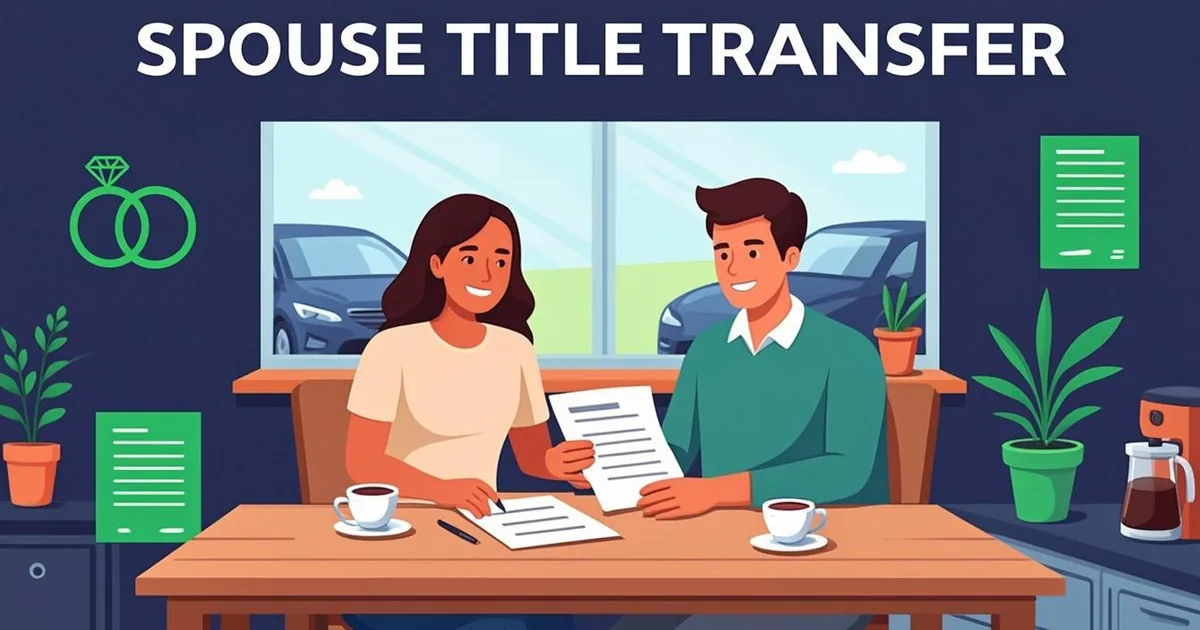

A divorce decree says who keeps the car, but the state title record decides who legally owns it. Until the title is retitled at the DMV, the vehicle still belongs to both names on paper. That gap causes insurance fights, registration renewal problems, and even repossession notices landing at the wrong address.
The fix is usually simple: bring the decree, the current title, and a state-specific form to the DMV and retitle the vehicle in one name. Most states waive sales tax on transfers ordered by a court. This guide walks the full process, the fees, the loan complications, and what to do when an ex refuses to cooperate.
Why the Divorce Decree Alone Doesn't Transfer Anything
I helped my neighbor through this last spring, and her assumption is the same one most people make. She thought filing the decree with the county court automatically moved the car into her name. Six months later, her ex was still getting toll violations from a car she drove every day.
A decree is an order between two people, not a record in the state's system. The DMV never reads court files. The state only knows what the certificate of title says, and until a new title is issued, that document still lists both spouses.
Every DMV office will ask for proof of the property settlement plus the title itself. The decree or a certified copy of the relevant page is what proves the court awarded the vehicle. The title is what actually gets reassigned.

What to Gather Before You Go
Walking in with a complete file is the difference between one DMV visit and three. Bring these items:
- The vehicle's current certificate of title, signed by both spouses on the transfer section
- A certified copy of the divorce decree or the property settlement page naming the vehicle and the receiving spouse
- A completed title application for your state, sometimes with a spouse-transfer affidavit
- Photo ID and proof of your new address if you moved during the divorce
- Proof of insurance in your name for the vehicle
- Payment for the title transfer fee and any registration costs
If the original title is missing, order a duplicate first. A lost title with a divorce in progress is a common situation, and the duplicate process runs through the same DMV. Our guide on how to replace a lost car title covers the paperwork in detail.
Step-by-Step: Retitling the Vehicle in Your Name
- Read the decree's vehicle clause carefully. It must name the vehicle by VIN or year/make/model and state which spouse receives it. If it splits vehicles vaguely ("each party keeps their own vehicle"), the DMV may reject it as proof.
- Get a certified decree copy if needed. Most DMVs accept a regular copy, but a few states require a court-certified copy from the clerk. Ordering one costs a few dollars and takes a day in most counties.
- Complete the title transfer section. Both names are on the title, so both signatures are normally required. Some states let a decree replace the missing signature; a handful require the ex-spouse regardless.
- Attach the tax-exemption form. Transfers under a divorce decree are exempt from sales tax in nearly every state, but only if you file the state's exemption affidavit. Skipping this form is the most common reason people get a surprise tax bill.
- Submit everything and pay the fee. Fees typically run $10 to $90 depending on the state. The clerk issues a new title listing only your name.
- Update registration and insurance the same week. Registration follows the title, and your insurer needs the new title record to remove the ex from the policy.

If There's Still a Loan on the Car
The lender is a third party the divorce court cannot bind. A decree can award you the car, but the loan contract still lists whoever signed it. Until the loan is refinanced or paid off, both borrowers usually remain liable for the debt.
The clean sequence looks like this: refinance the loan in the receiving spouse's name, wait for the lien release on the old loan, then complete the title transfer. If the car is paid off but the paper title is lost or still shows the lender, our guide on a lost vehicle title with an active loan explains how to get the lien released and a clean copy issued.
State Rules That Surprise People
State law splits into two systems, and the difference shapes what the DMV asks for. Nine states follow community property rules: Arizona, California, Idaho, Louisiana, Nevada, New Mexico, Texas, Washington, and Wisconsin. In these states, most vehicles bought during the marriage belong to both spouses equally regardless of whose name is on the title.
Everywhere else, equitable distribution applies, which means the court divides property fairly rather than equally. For the DMV, the practical effect is the same: the decree is your ownership proof. But community property states often add a spouse or former-spouse affidavit to the paperwork.
Sales tax treatment is where states genuinely differ. Texas charges a flat $10 on qualifying family transfers under Form 14-317, which covers divorcing spouses. California exempts transfers between spouses and former spouses from use tax but requires the family transfer section of its REG 262 form. A few states treat a divorce transfer like any private sale if you skip the exemption form, which is why filing it matters.
Typical Fees and Timelines
| State | Transfer Fee (approx.) | Sales Tax on Divorce Transfer | Where to File |
|---|---|---|---|
| California | $15–$23 | Exempt with family transfer form | DMV office or mail |
| Texas | $28–$33 | $10 flat with Form 14-317 | County tax office |
| Florida | $75–$86 | Exempt (decree required) | County tax collector |
| Illinois | $155 | Exempt with RUT-50 exemption | Secretary of State office |
| New York | $50 | Exempt (decree required) | DMV office |
Treat these as planning numbers and confirm with your state before the visit, because fees change yearly. Illinois is a good example of why the exemption form matters: the RUT-50 exempts the transfer, but without it the state assesses tax on the vehicle's value. The IRS side is simpler — transfers between spouses are not taxable events, and the unlimited marital deduction covers gifts during a divorce settlement year.
What If Your Ex Won't Sign the Title?
This is the scenario that fills DMV complaint lines. Your decree says the car is yours, but the ex refuses to sign the transfer section or is simply unreachable. You still have several workable paths.
First, ask the DMV whether your state accepts a decree as a signature substitute. States like Arizona and Colorado will retitle on the court order alone in many cases. Second, some states offer a court-ordered title process where a judge's order directly instructs the DMV to issue a new title without the other party.
Third, a certified letter demanding the signature creates a paper trail that family courts take seriously. Judges can hold a non-compliant spouse in contempt for blocking a court-ordered transfer. My advice from watching these disputes: file the motion before months pass, because registration renewals and insurance claims keep forcing the issue.
How This Differs From Other Family Transfers
Divorce transfers are the mirror image of the voluntary family transfers most guides cover. A transfer between spouses during marriage is a gift with simple paperwork, while a divorce transfer is a court-supervised split where timing and the decree language decide everything.
The same logic extends to other relatives. Gifting a car to an adult child follows the state's parent-to-child transfer rules, and broader family moves are covered in our guide to transferring a title between family members. All of these share one trait: they skip sales tax when you file the right affidavit.
If you inherited a vehicle through a divorce-adjacent estate settlement instead, the process changes to probate rules. Our guide on a lost title for an inherited vehicle explains that separate path.
Selling Instead of Retitling
Some divorce settlements end with "sell it and split the proceeds" rather than one spouse keeping the car. Even then, the title question comes first. A sale with both names on the title requires both signatures at the notary or DMV, and an uncooperative ex creates the same problem as a refused transfer.
The practical order for a sale settlement: sign the purchase contract together, sign the title together, split the proceeds at closing, and let the buyer's DMV paperwork dissolve the shared ownership. If the car sells before the decree is final, most states still treat the transaction as community or joint property requiring both signatures.
Payoff math matters here too. An outstanding loan gets satisfied from the sale proceeds at closing, and the lender's release follows the money. Selling a financed car mid-divorce without the lender's awareness is how double-payoff disputes start, so loop the loan servicer into the timeline early.
The Name-Change Cascade After the Transfer
Spouses who resume a maiden name during divorce face a sequencing trap. The DMV wants the title application name to match your current legal ID, which means the license or state ID updates first. Updating the license needs the decree, and the decree needs the court's final filing — so the correct order is decree, then ID, then title.
Skip the order and the clerk either rejects the application for a name mismatch or creates a title with a name you're about to abandon. Either outcome costs a second visit and, in some states, a second fee. Bring both the old and new ID to the counter if the change just happened, since the clerk may need to see the transition documented.
The cascade continues downstream: insurance policy, registration renewal address, toll accounts, and any parking permits tied to the vehicle. Each one checks against the title record eventually, and mismatches surface years later at the worst moments — a claim, a sale, or a traffic stop.
For official fee schedules and form downloads, your state's motor vehicle agency publishes them online — Texas's county tax office process lives at txdmv.gov, and California's family-transfer rules at dmv.ca.gov — worth a five-minute check before the counter visit.
After the Transfer: Three Updates People Forget
Once the new title arrives, update your registration address if you moved. States mail renewal notices to the title address, and a missed renewal can mean a citation during a routine stop.
Next, call your insurer and remove the ex from the policy once the loan and title are settled. Keeping a former spouse listed can create liability entanglements if they drive the car after the transfer.
Finally, keep a copy of the decree page and the new title together in your files. If the vehicle is ever sold, registered in another state, or reported lost, that pairing proves the ownership chain in minutes. Our explainer on what a car title actually is covers why this paper trail matters for every future transaction.
One more practical note: if you are relocating to a new state as part of the divorce, the new state will want the title before it issues local registration. Deadlines there run 30 to 90 days from your move, so retitle first if you can, then register in the new state. Our state-by-state title guides hub lists each state's deadline and fee.