
Two identical pickups sit on a dealer lot. One lists at $28,000; the other, same year and same paper miles, lists at $17,000. The difference is one word on each vehicle's title.
The cheaper truck carries a salvage brand. An insurance company once declared it a total loss, and the state stamped that fact onto the title permanently.
Understanding that word matters to anyone buying, selling, or repairing a damaged vehicle. It shapes value, insurability, and what the vehicle can legally do on the road.
This guide covers the full lifecycle of the salvage brand. It explains how a vehicle earns one and what the brand legally says.
It also covers the rebuilt path and the insurance consequences that last for life. A final section separates a good salvage deal from a bad one.
Table of Contents
- How a Vehicle Earns a Salvage Brand
- What the Brand Says Legally
- From Salvage to Rebuilt: The Road Back
- What the Brand Does to Insurance and Value
- The Red Flags Around Branded Vehicles
- Who Should Actually Buy Salvage or Rebuilt
- Reading the Brand the Right Way
- Where the Brand System Is Heading
How a Vehicle Earns a Salvage Brand
The brand begins with an insurance decision, not a DMV one. When damage approaches or exceeds a vehicle's market value, the insurer declares it a total loss. The exact threshold varies by state and by policy.
Common formulas set it between 70 and 100 percent of value. The insurer pays the owner the vehicle's value and takes ownership of the wreck. The title it holds gets surrendered to the state for a salvage certificate.
Collisions produce most salvage brands, but they are not alone. Flood events brand entire parking lots at once. Hurricane seasons have moved tens of thousands of branded vehicles through the system.
Hail does it in concentrated bursts, and theft recovery brands vehicles the insurer has already paid. Fire and vandalism round out the list.
The brand does not necessarily describe the damage's severity. It describes the insurer's economics at the moment of the decision.
That last point deserves emphasis, because it changes how buyers should read the brand. A salvage brand on a five-year-old luxury sedan might reflect a modest damage estimate against a steep depreciation curve. The same brand on a cheap commuter car reflects genuinely heavy damage.
The brand is the beginning of a question, not the end of one. The answer lives in the vehicle's specific damage history.
What the Brand Says Legally
A salvage certificate means the vehicle cannot be registered for road use in its current state. That is the core legal effect. Salvage vehicles drive nowhere except to inspection appointments, where permitted.
The brand also blocks clean-title pricing and standard financing. Most lenders will not finance a salvage-branded vehicle. Full-coverage insurance is unavailable in most markets until the vehicle is rebuilt and rebranded. The value discount that follows the brand, and how repairs move it, is quantified in our rebuilt title resale value guide.
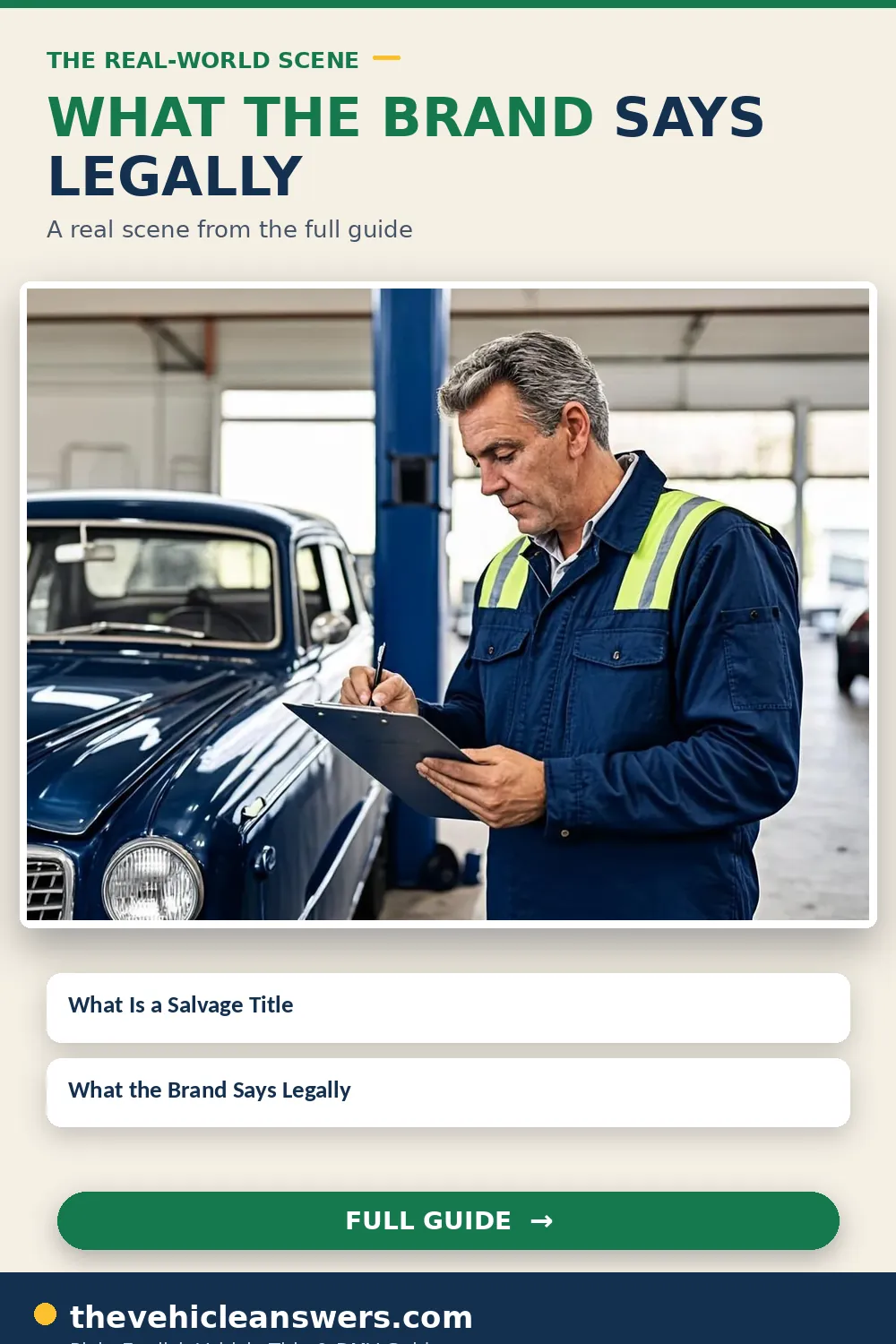
The brand follows the vehicle through the national title system permanently. States participate in the National Motor Vehicle Title Information System. That federal database tracks brands across state lines.
The old trick of driving a branded car to a lenient state largely died. The receiving state's application asks about prior branding, and the database answers.
Vehicles with hidden brands surface constantly at the new owner's first title filing, weeks after the money changed hands.
| Brand | What it typically means | Road-legal? |
|---|---|---|
| Salvage | Declared total loss by insurer; damage unrepaired or repair not verified | No — not registrable |
| Rebuilt / Reconstructed | Previously salvage; repaired, inspected, and returned to road use | Yes — with the brand permanently attached |
| Flood / Water | Water damage reached the brand threshold | Depends on state and repairs |
| Junk / Scrap only | Not to be repaired or returned to road | No — parts use |
| Theft recovery | Recovered after a total-loss theft claim | Depends on state process |
From Salvage to Rebuilt: The Road Back
A salvage vehicle returns to the road through the rebuilt-title process. States run it with real rigor; uninsured wrecks on public roads are what the brand exists to prevent.
The sequence, in the shape most states follow:
- Repair the vehicle with documentation. Keep receipts for major components and photographs of the repair stages. Add records of any structural work; states increasingly demand this file at inspection.
- Apply for rebuilt status on the state's application, surrendering the salvage certificate.
- Pass the state inspection. A certified inspector verifies the vehicle's identity, and VIN integrity checks are strict here. The inspector examines the repairs, checks the safety systems, and confirms the damage history matches the repair file. Inspections fail often, usually for documentation gaps rather than bad repairs.
- Receive the rebuilt title. It carries the rebuilt brand permanently and restores registration eligibility.
- Insure accordingly. Full coverage exists for rebuilt vehicles, but it prices differently and some insurers decline them outright. The collision-coverage market for rebuilt cars is real but narrower.
The economics can make this path worthwhile. A vehicle with a $30,000 clean-title value, salvaged at $22,000 in damage, might sell at salvage auction for $12,000. Careful sourcing might repair it for $14,000 and leave a rebuilt-market value around $20,000.
The margin is the rebuilder's skill, and it is thinner than the internet suggests. That is why professional rebuilders dominate the profitable end.
Misplaced the salvage certificate before any of this starts? Our guide to replacing a lost car title covers the duplicate-title request.
What the Brand Does to Insurance and Value
The value discount is permanent and substantial. Rebuilt vehicles typically trade at 20 to 40 percent below their clean-title equivalents. The exact number varies with the vehicle's age, the damage type, and the local market.
The discount is the market's price for uncertainty about repair quality, hidden damage, and resale difficulty. It persists no matter how good the repairs were; the buyer cannot verify what the inspection did not cover.
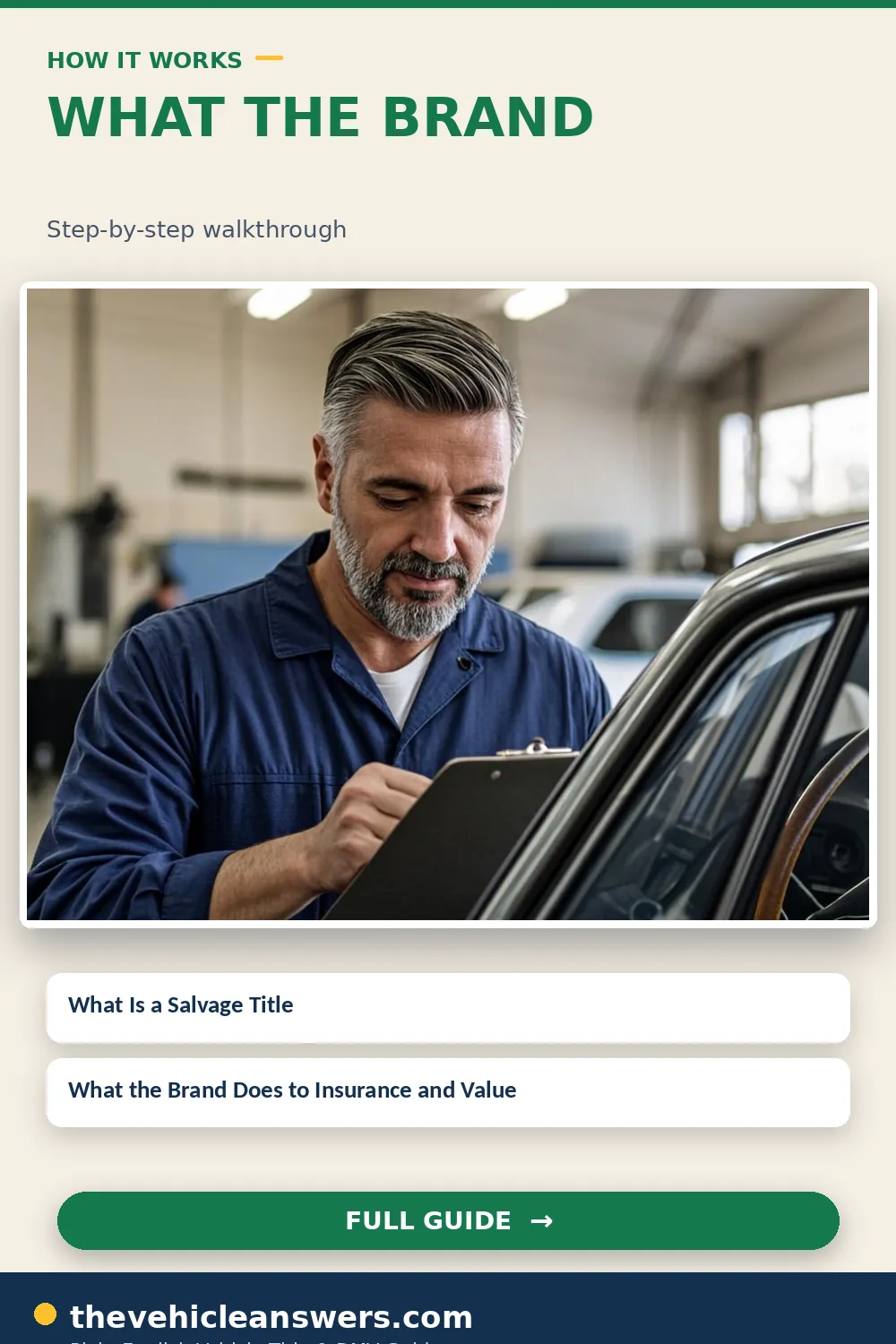
Insurance follows the same logic. Liability coverage is generally available for rebuilt vehicles. Collision and comprehensive coverage is the complicated layer.
Several insurers write it at reduced assessed values, some apply salvage-specific depreciation, and some decline rebuilt vehicles entirely. Owners of rebuilt vehicles should get coverage terms in writing before assuming a claim will settle at clean-title value.
The disputes that follow rebuilt-vehicle claims almost always trace to this gap.
The residual-value effect compounds at every future sale. The brand does not fade, does not age out, and transfers with the VIN through every subsequent transaction. That persistence is exactly its purpose.
Buyers two owners downstream still deserve to know the vehicle was once declared a total loss. The national database ensures they can find out.
The Red Flags Around Branded Vehicles
The brand system's integrity depends on honesty at every transfer, and the fraud patterns cluster where that honesty breaks. Title washing means moving a branded vehicle through states or paperwork chains to obscure the brand.
The national database has largely squeezed the practice out. It survives in private-sales paperwork errors and outright forgeries, both of which surface at the buyer's title filing.
Odometer fraud concentrates in branded vehicles, because the damage makes mileage claims hard to verify. The cloned-VIN problem is rarer and serious: a wrecked clean car's identity applied to a salvage twin. VIN verification steps catch it in any careful purchase.
Buyers protect themselves with three moves. Pull the vehicle's record through the national title system and a commercial history report before negotiating. The federal consumer entry point is vehiclehistory.gov.
Physically verify the VIN across the dash plate, the door sticker, and the documents. Treat any seller resistance to those checks as the deal-ending signal it is.
Our guide on VIN discrepancies on titles covers what happens when the documents and the metal disagree.
For sellers, the honest path is also the profitable one. The brand is on the record regardless, and disclosure keeps the sale enforceable. Concealing a brand in a private sale voids transactions in most states and invites fraud claims.
Unwound sales can arrive months later, after the buyer has invested in repairs the seller then reimburses. The brand prices the vehicle; concealment prices the lawsuit.
Who Should Actually Buy Salvage or Rebuilt
The branded market serves specific buyers well. Off-road and farm-use vehicles often matter for the drivetrain, not road legality. Experienced DIY rebuilders buy at auction with verified damage histories.
Budget-motivated commuters buy rebuilt vehicles with clean inspections and documented repairs. And the parts trade treats a scrap-only brand as a discount on components.
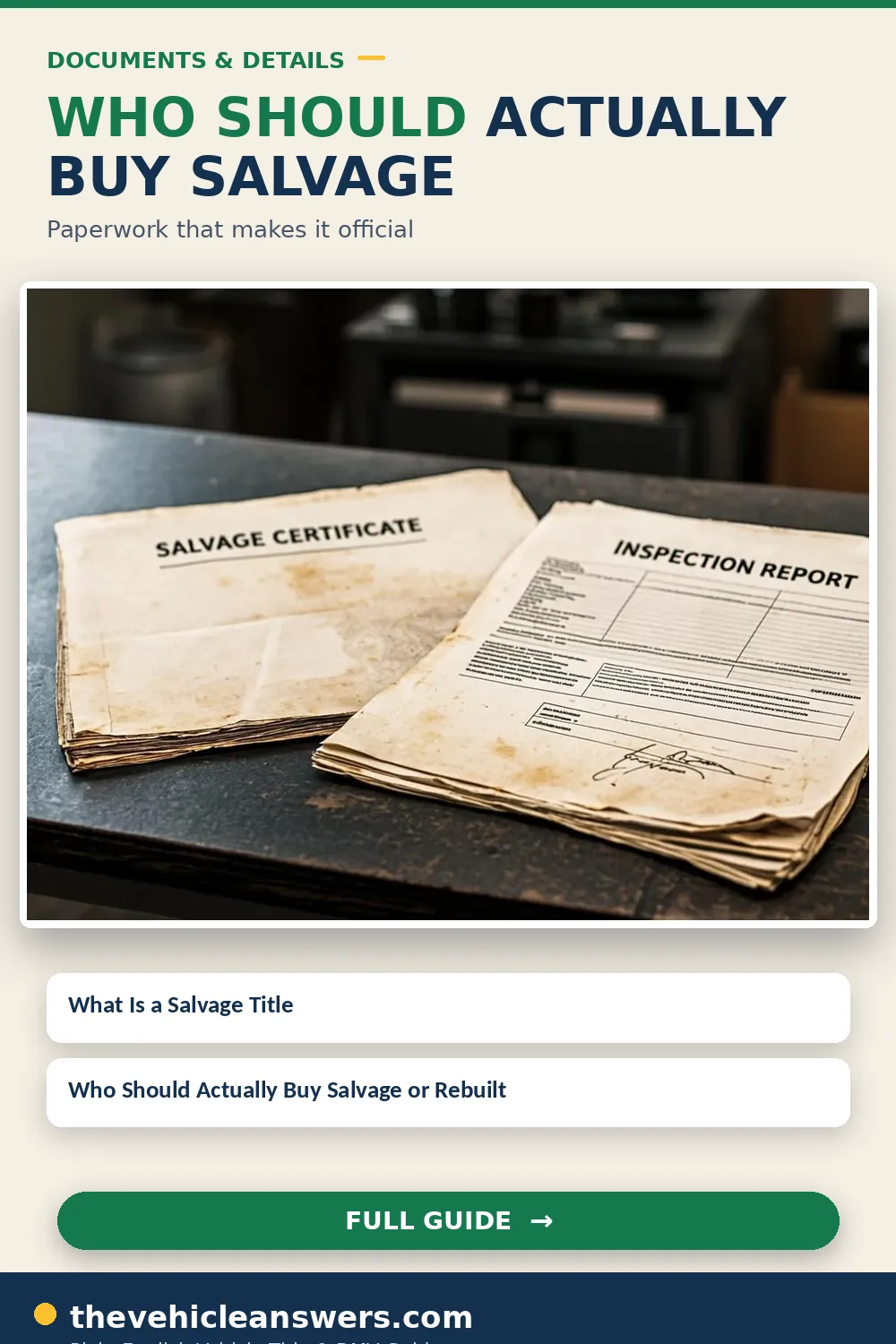
The buyers who get hurt skip the inspection, finance at clean-title assumptions, or buy flood vehicles blind. Water does slow, expensive things to modern electronics over the following eighteen months.
The brand exists to make the risk visible. For the buyer who reads it correctly, it is also where the value lives.
State-by-state rebuilt processes and fees live on the guides hub. The underlying document mechanics are in our title explainer. The federal recall database at nhtsa.gov is free to check on any vehicle, branded or not, before money changes hands.
Reading the Brand the Right Way
The word itself deserves a closing reframe. "Salvage" does more work in the language than in the law. The brand describes an insurance event, and the market prices it.
The vehicle is whatever the repairs and the inspections actually made it.
The buyers who thrive read the word as a discount with homework attached. They pull the history, verify the VIN, commission the independent inspection, and price the remaining uncertainty honestly.
The buyers who get hurt read it as a horror story to avoid or a discount to grab blindly. Both misreadings cost the same way.
The brand is public for a reason. The homework is the reason it pays.
Where the Brand System Is Heading
The brand system is changing underfoot. Vehicles carry more electronics, and repair costs keep climbing. The total-loss threshold now catches cars that would once have been repaired.
That means more salvage brands on newer, less-damaged vehicles than the brand's history suggests. The economics of sensors and calibration have turned bumper repairs into total-loss events.
The branded market now includes vehicles whose damage a decade ago would have been a line item. Buyers should adjust their assumptions accordingly.
The modern salvage brand is less a proxy for catastrophic damage. It is more a record of an insurer's arithmetic against increasingly expensive repair bills. The homework matters more than ever, and the discount often exceeds the actual damage more than it used to.
